Shirts
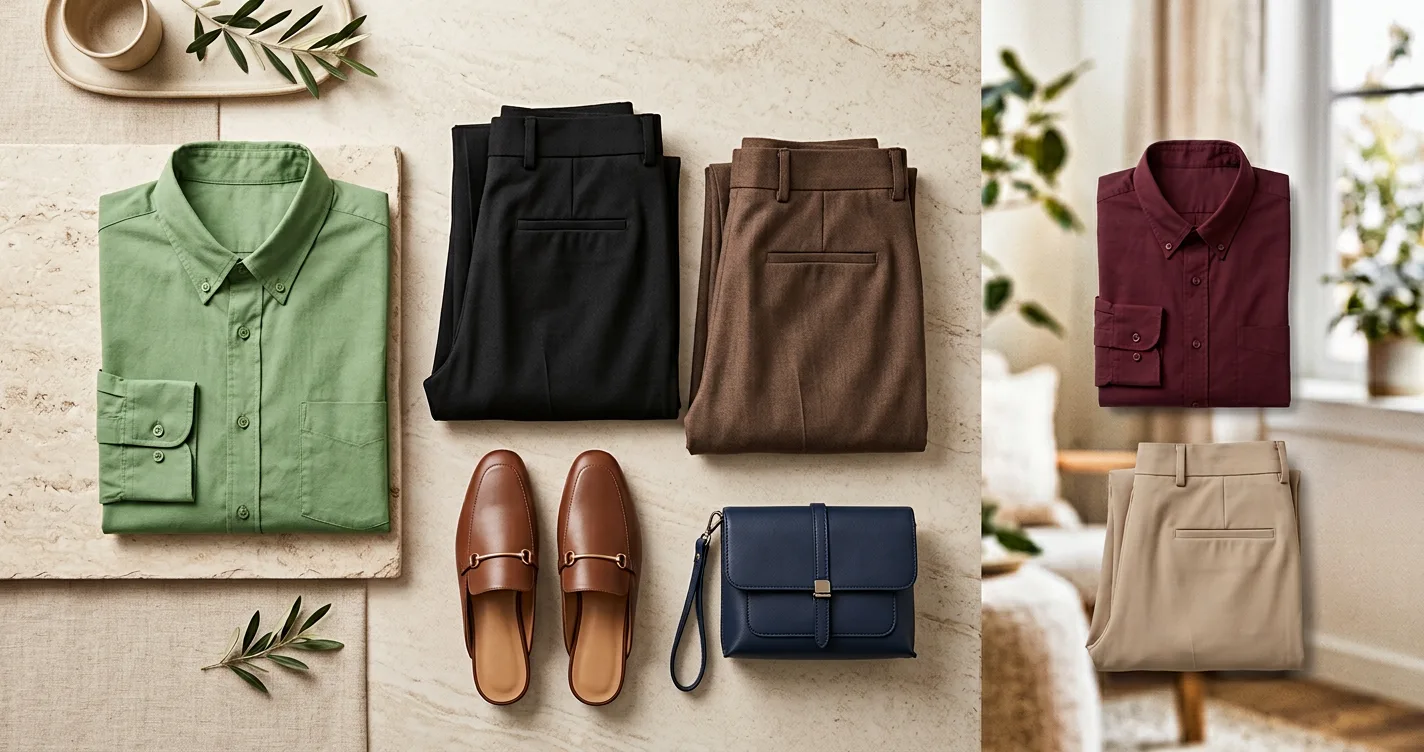
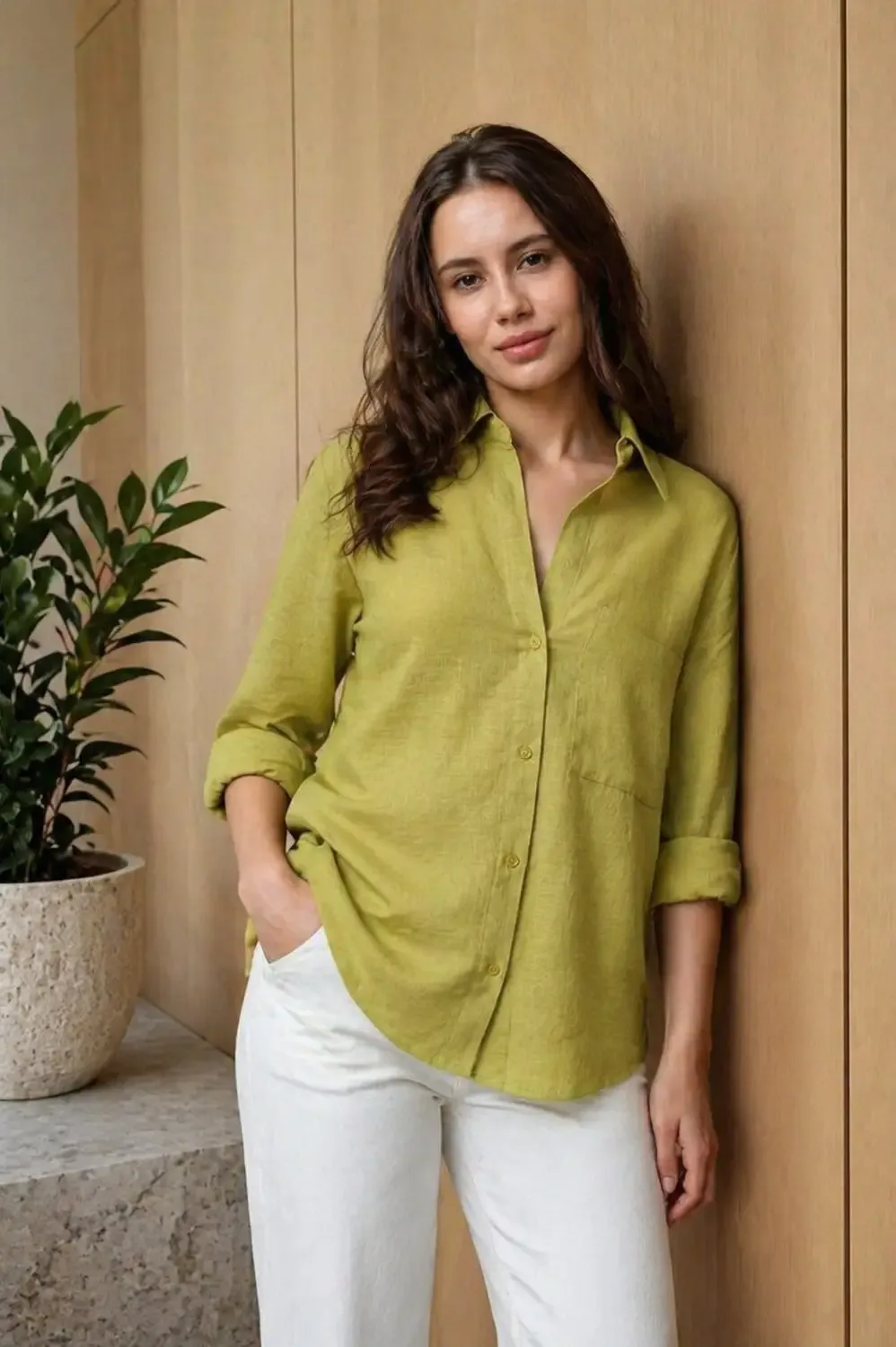
Metronaut Women's Cotton Shirt in Green
Metronaut
Lime green pure cotton in a boxy cut: cool on a hot morning and cheap to stain.
Starting price
₹307
on Flipkart
Styling guide
Korean outfits for women at Indian weddings: 7 guest looks from haldi to reception, ₹1,771 to ₹4,130, built on soft dresses, shirts and flat shoes.
Styled by Akash Nishadraj · Updated 3 days ago · Published · Prices checked · 7 looks, 17 products
Korean outfits for women can work at an Indian wedding, as long as you treat the wedding as five different rooms. A cousin's wedding weekend might hold a haldi on a hot morning, a mehendi on the floor all afternoon, a sangeet with dancing, a ceremony with elders, and a reception under chandeliers. Each one has its own code.
The seven looks below plan one outfit per function, using Korean styling ideas: soft tailoring, gentle colour, easy shapes and flat shoes. A complete look costs ₹1,771 to ₹4,130. The pieces repeat on purpose. One pair of black Kenneth Cole leather loafers carries three functions and goes back to the office on Monday; one gold necklace set carries three; a ₹448 Fuback trouser pack gives you two pairs. Spread across a wedding season, the expensive pieces cost less per function than a single outfit worn once.
Korean dressing is not hanbok, and it is not K-pop stage wear. In everyday Korean fashion, it means clean silhouettes, soft tailoring, gentle colours and one sweet detail. Those ideas translate well to Indian functions, because they lean modest and comfortable. What does not translate is the climate: Korean outfits are layered for cold, and Indian wedding days are often hot.
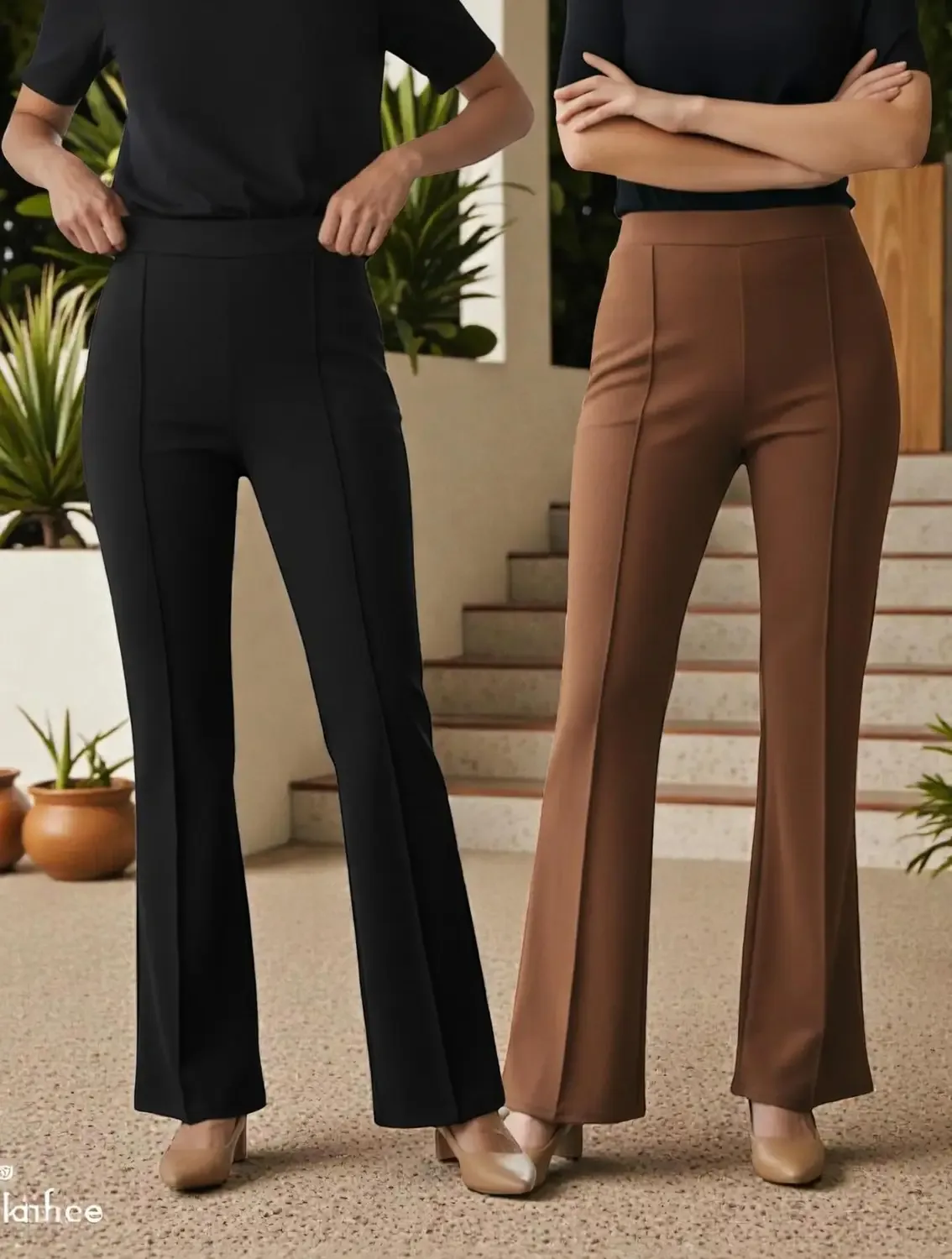
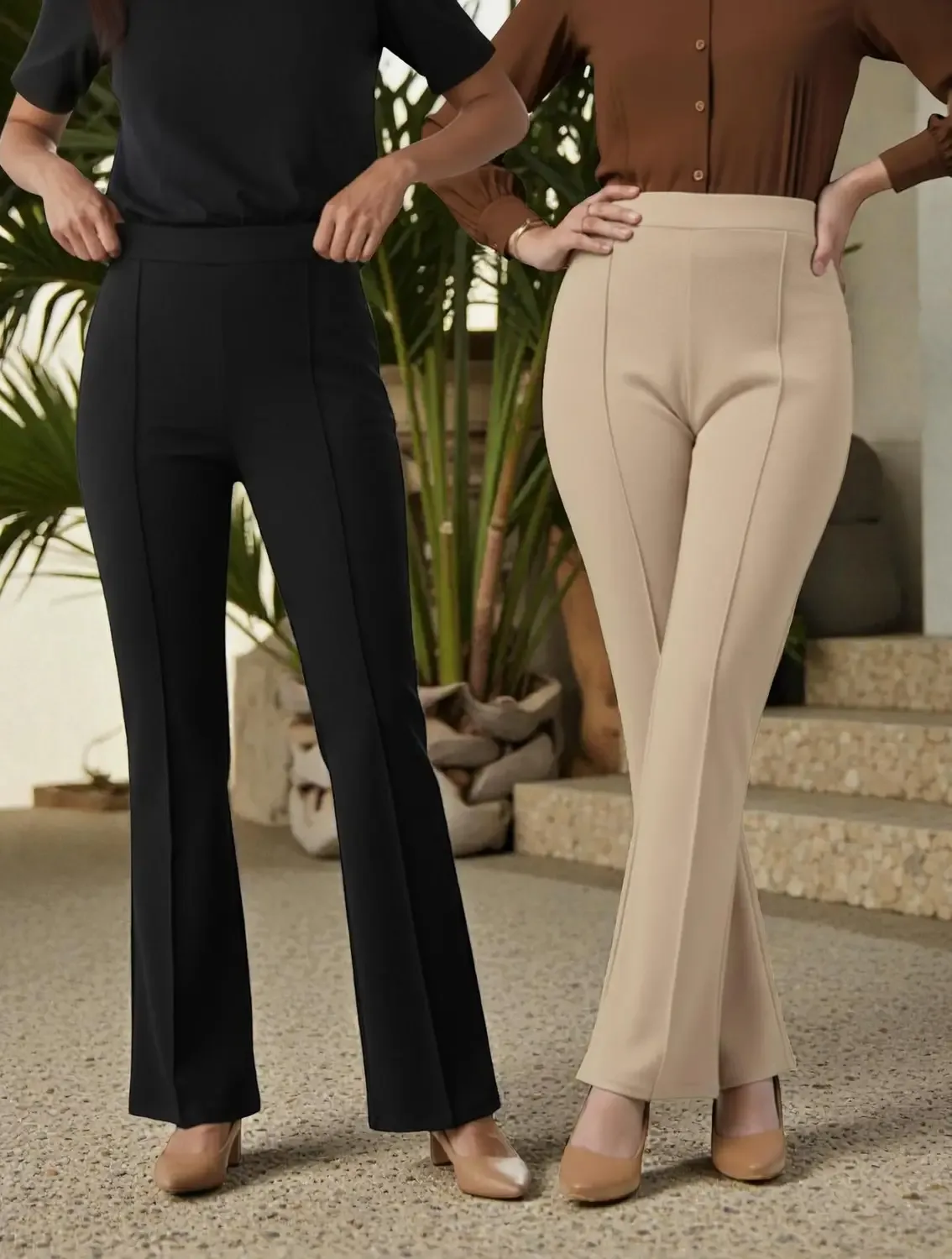
A Korean shirt is boxy, not fitted. Korean trousers are wide or flared, not skinny. A Korean dress skims the body from a defined waist. The lime Metronaut shirt in this edit is listed as a boxy pure cotton shirt, and the Fuback trousers are flared with pintucks. Together they look polished without a blazer, which is what a day function in heat needs.
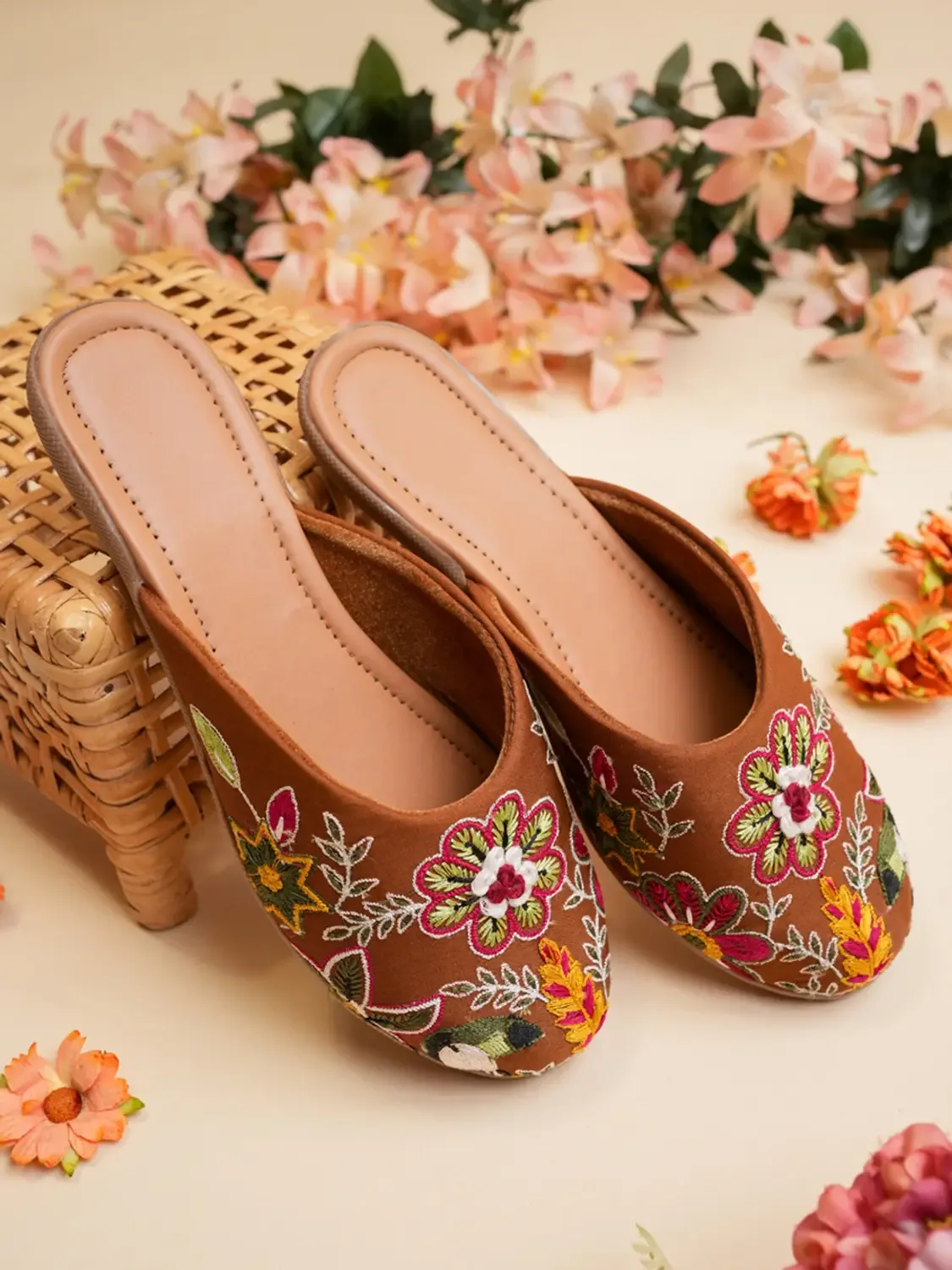
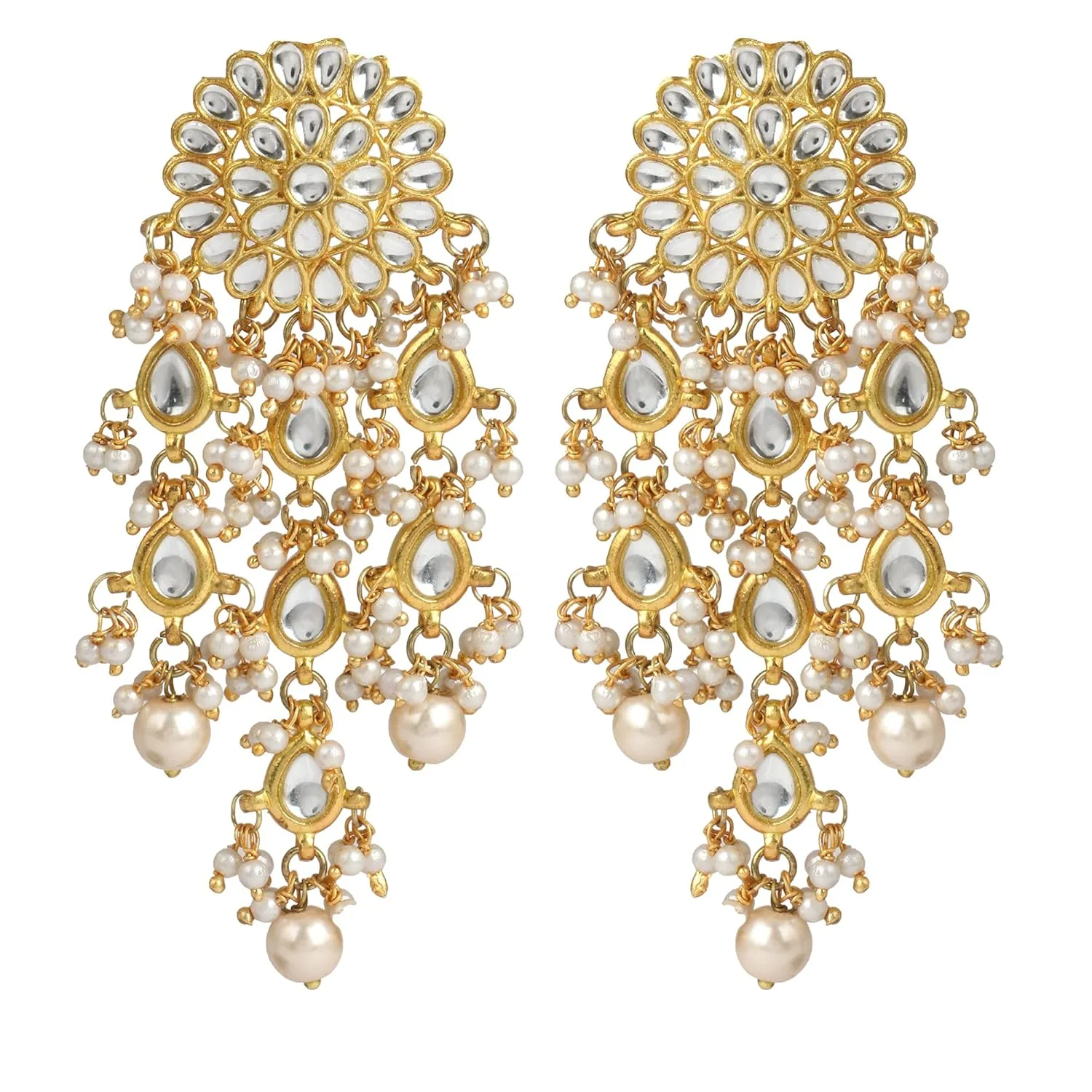
Korean palettes use soft colours, then let one detail stand out. At a wedding, that detail is often the jewellery: a kundan earring, a gold necklace set, a floral embroidered mule. The dress or shirt stays calm, and the accent carries the festive message Indian functions expect.
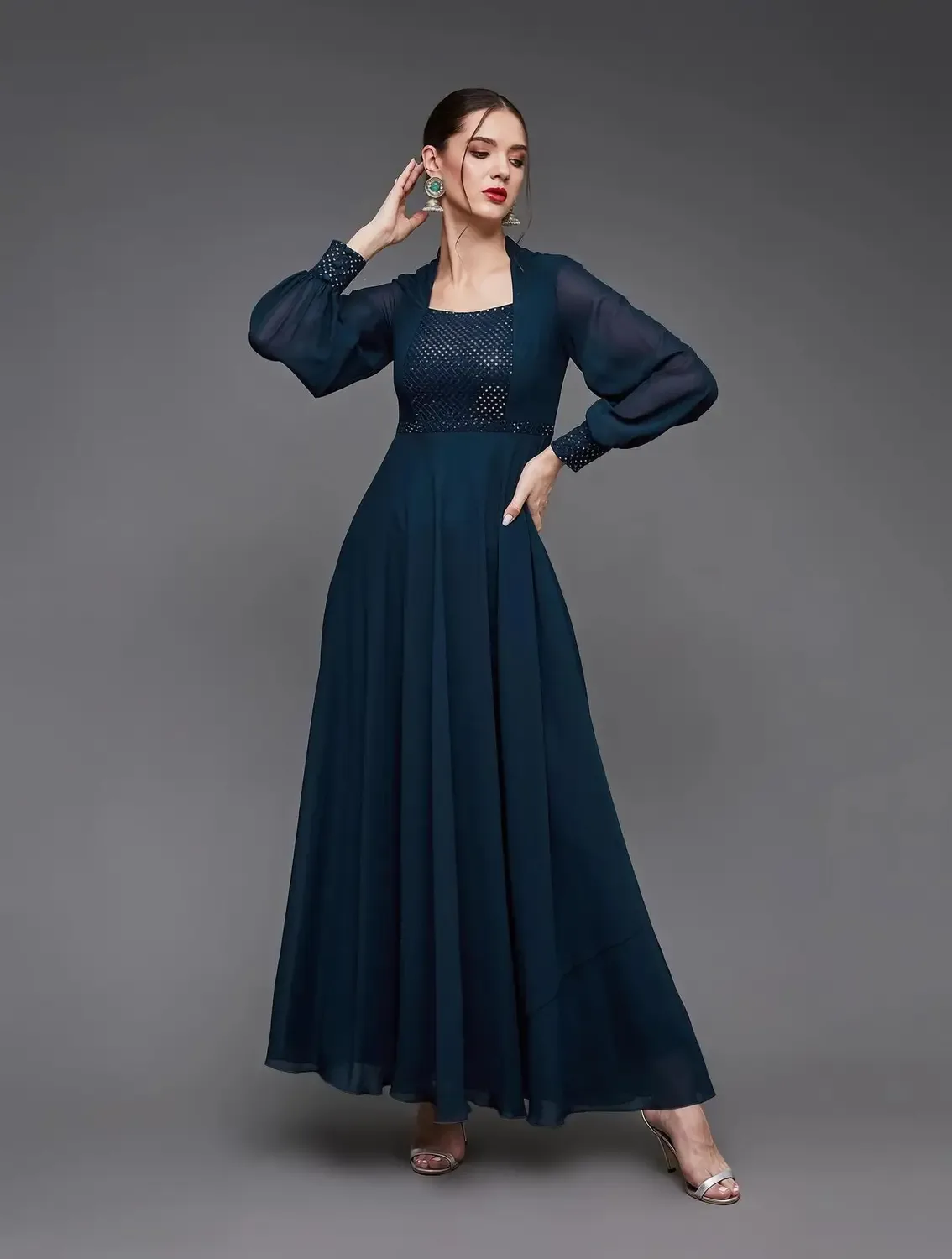
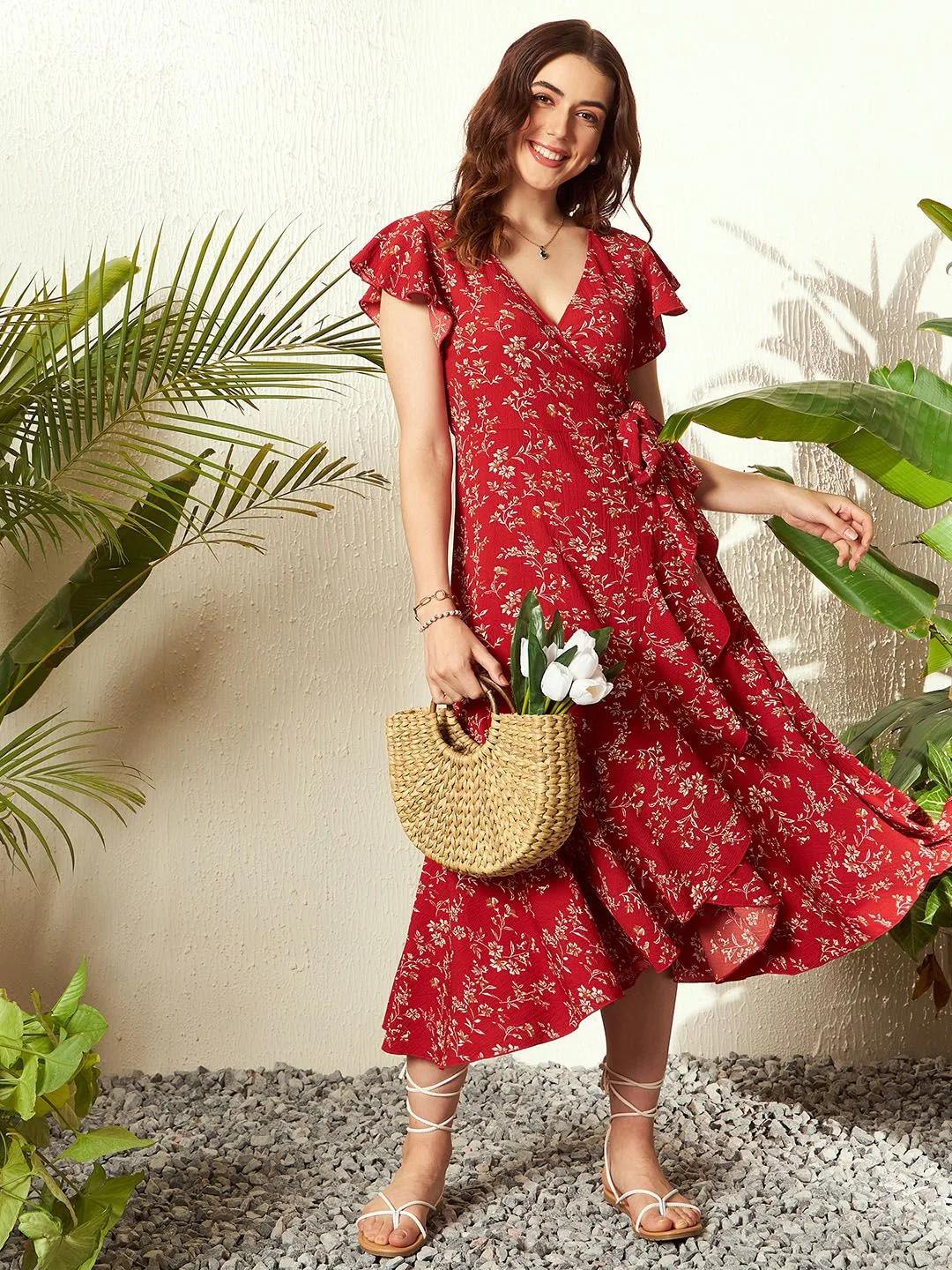
In Seoul, a cardigan or a blazer adds coverage. In an Indian summer, that same layer becomes too hot. Sleeves do the job instead. The teal Miss Chase maxi has sheer bishop sleeves, the red and white wrap dress has flutter sleeves, and the maroon Yanvi shirt has half sleeves. Each covers the arms without adding weight.
Many Indian families avoid head-to-toe black or white at auspicious functions, so keep those for a city cocktail and ask the hosts first. In many communities, red belongs to the bride, so a red guest dress is better at a puja or a friend's wedding than at the main ceremony. Avoid short hems and bare shoulders at a temple or gurdwara ceremony. And avoid heavy synthetics at a daytime haldi, where you will sit in the sun for hours.
Yes, at most functions, with two checks. The first is the function. A sangeet, a cocktail and a reception are the most open to dresses, because they are evening parties. A haldi and a mehendi are relaxed and practical. The main ceremony is the most traditional, and many families expect Indian wear there.
The second check is your role. A guest from the friends' side has more freedom than a close cousin, who may be in family photos and rituals. If you are close family, ask the person organising the function, and plan your dresses for the evenings.
The Korean styles in this edit help, because they already cover more than most party dresses: sleeves, calf-length hems, closer necklines. A long georgette maxi with sleeves and kundan earrings sits comfortably beside lehengas. A short black sheath does not.
Each Indian wedding function asks a different question, and the right outfit answers it.
Look 1 of 7
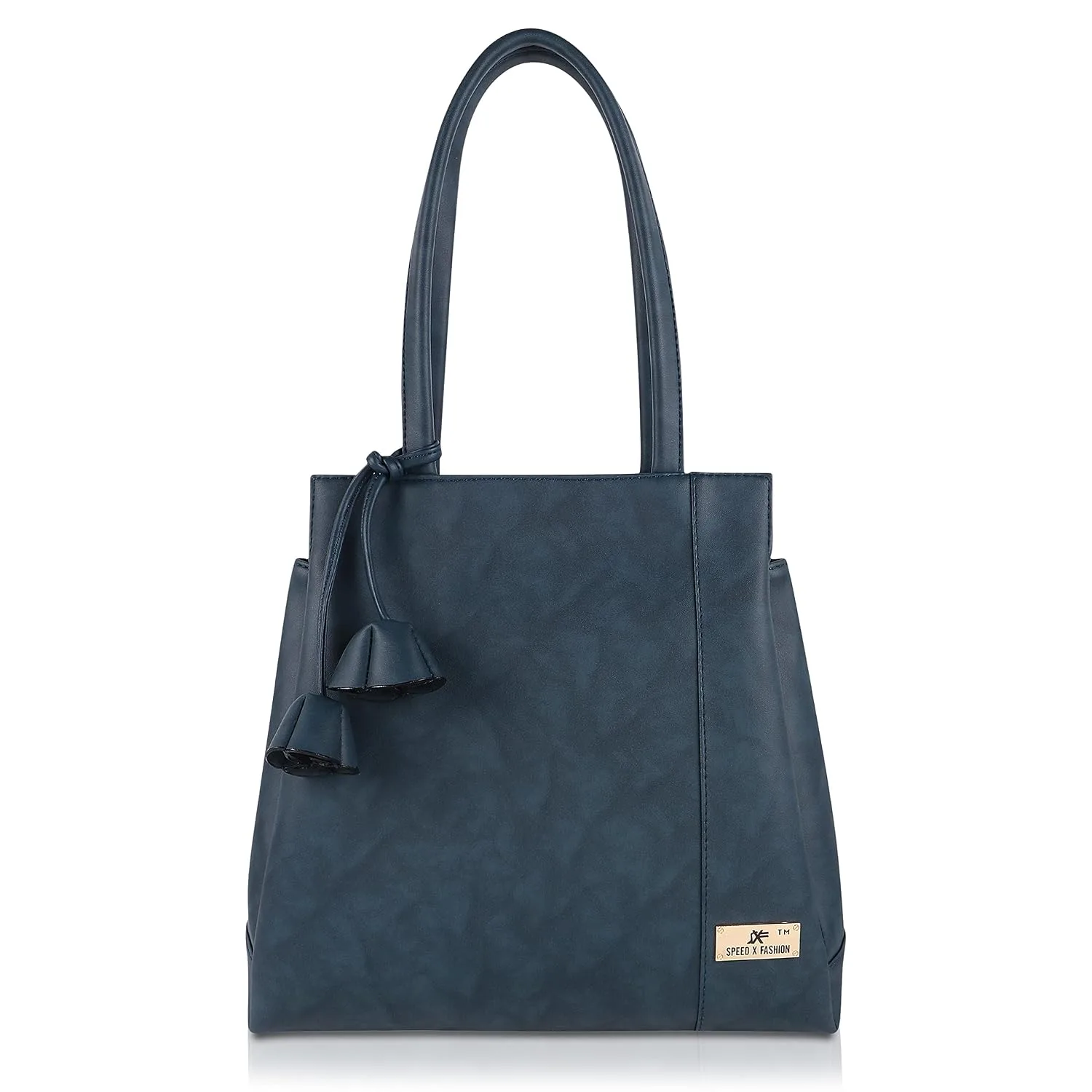
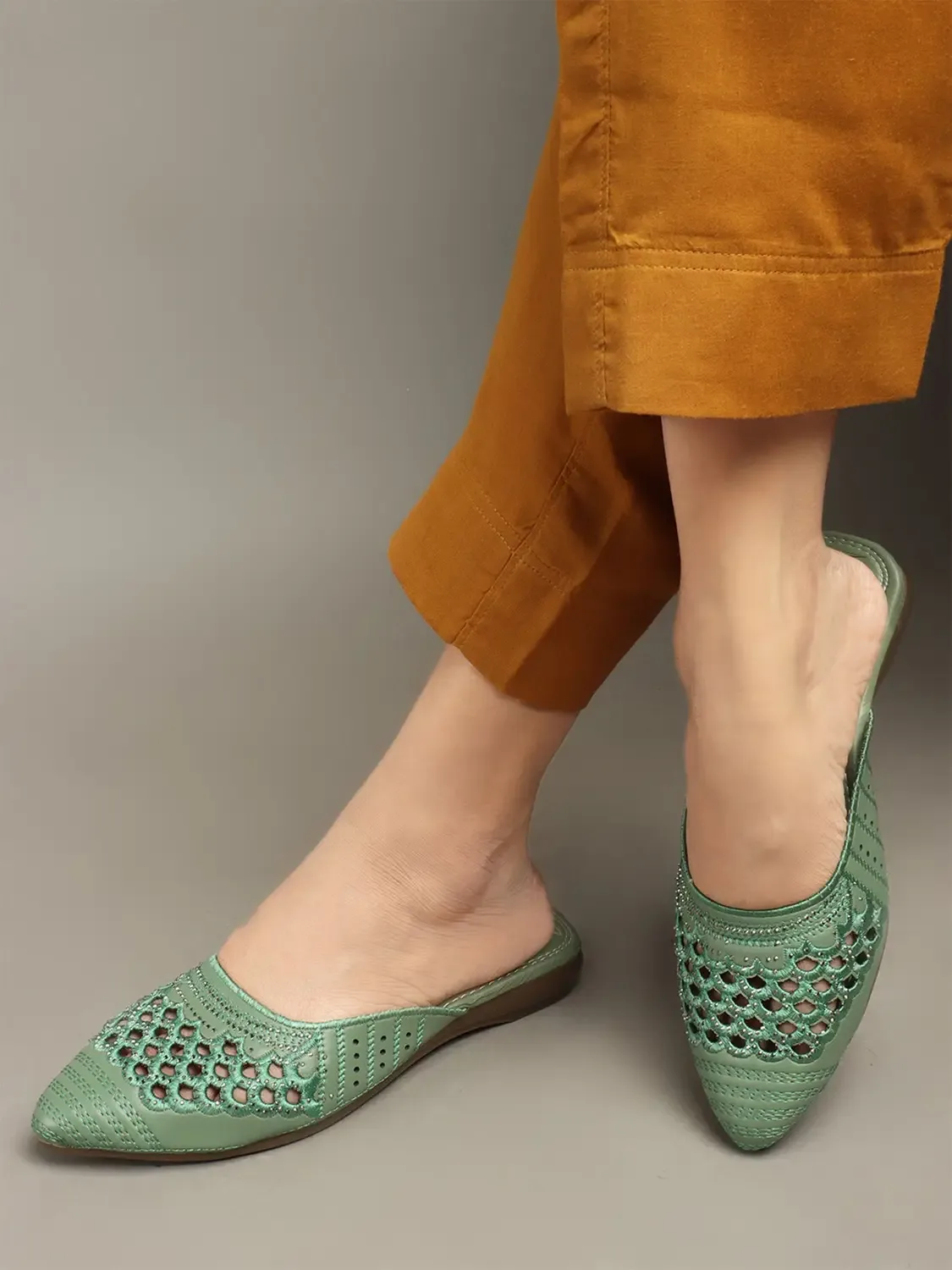
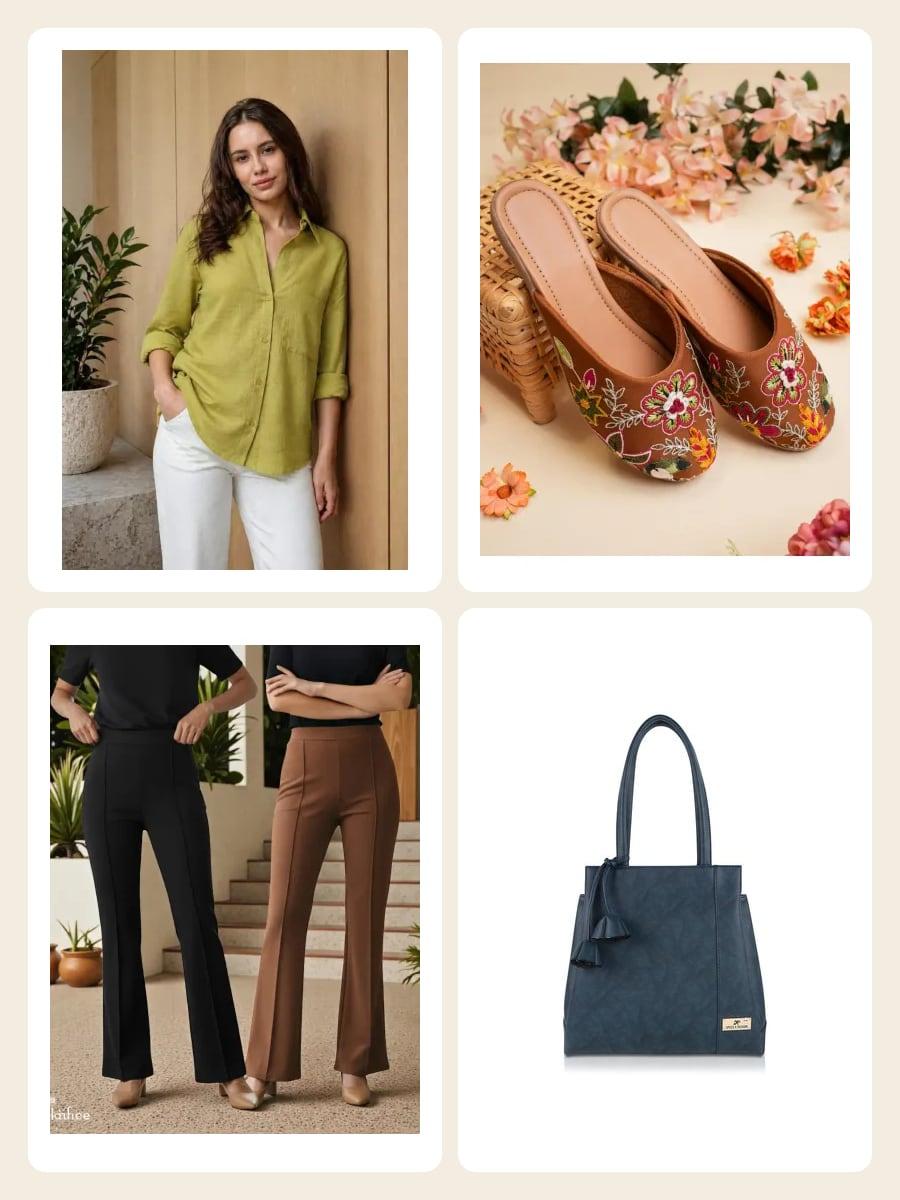
A lime shirt haldi outfit gives you the function's yellow-green mood in cheap pure cotton, which is what you want when turmeric starts flying. The boxy shirt sits over brown flared trousers; the Fuback pack also holds a black pair for work. Floral embroidered mules bring the festive note, and the slate-blue tote holds the essentials. What to keep in mind: Turmeric stains cotton, so treat this as a haldi-only shirt. Wash it in cold water as the listing asks.
Shirts
Metronaut
Lime green pure cotton in a boxy cut: cool on a hot morning and cheap to stain.
Starting price
₹307
on Flipkart
Trousers
Fuback
A pack of two flared trousers; wear the brown pair to the haldi and keep the black for work.
Starting price
₹448
on Flipkart
Mules & Clogs
Nyty20
Brown canvas with pink, yellow and green flowers: the festive accent, and easy to slip off.
Starting price
₹408
on Flipkart
Bags & Backpacks
Sxf Speed X Fashion
Listed as a clutch; the photos show a slate-blue structured tote with a tassel.
Starting price
₹608
on Amazon
Bags & Backpacks
Ensac
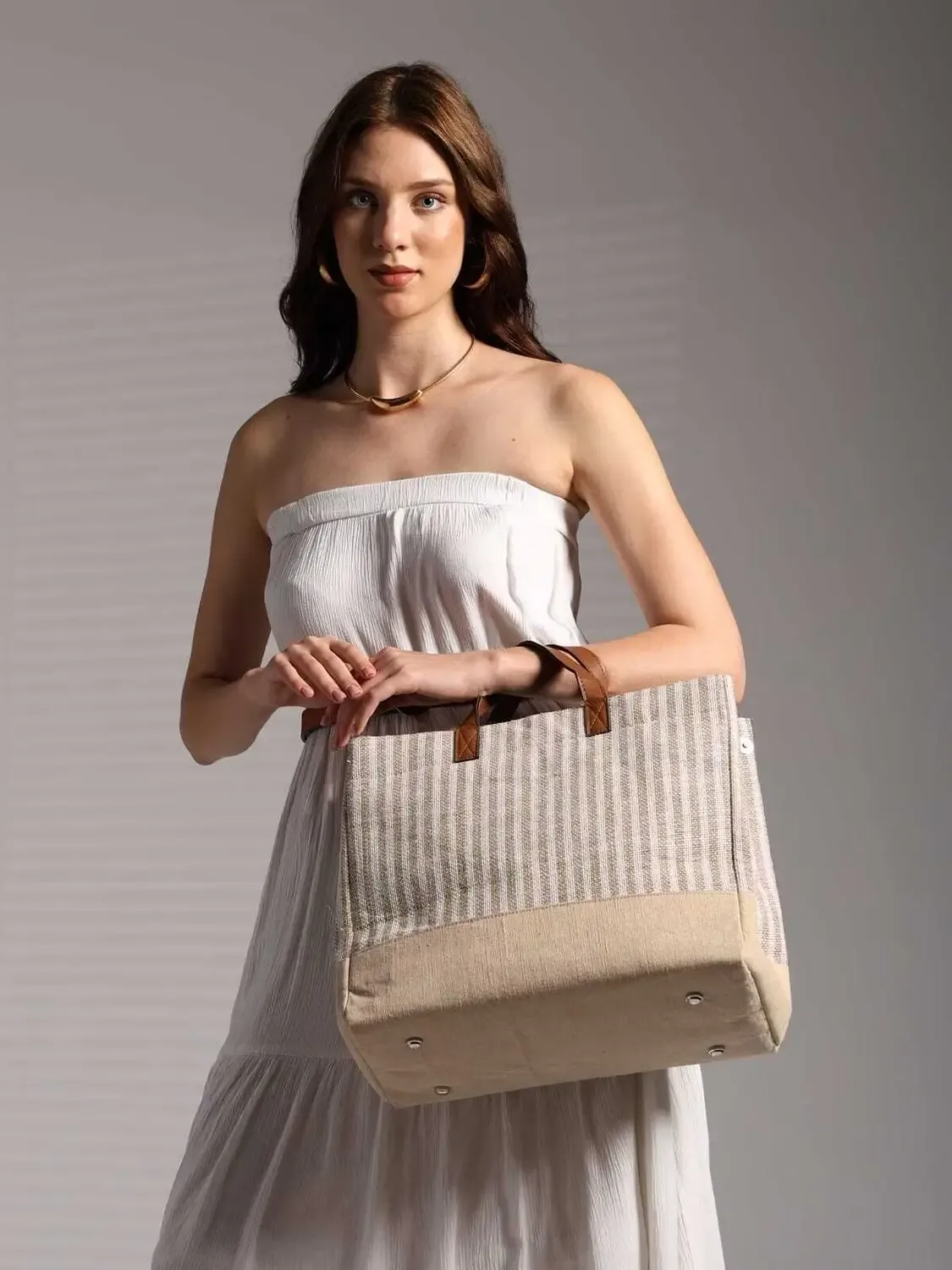
A jute tote with a striped top; it suits the haldi's earthy mood and costs less.
Starting price
₹565
on Flipkart
Complete look = the 4 pieces' current prices added up, without the swaps. Each piece is sold separately by its own store, and prices can change.
Look 2 of 7
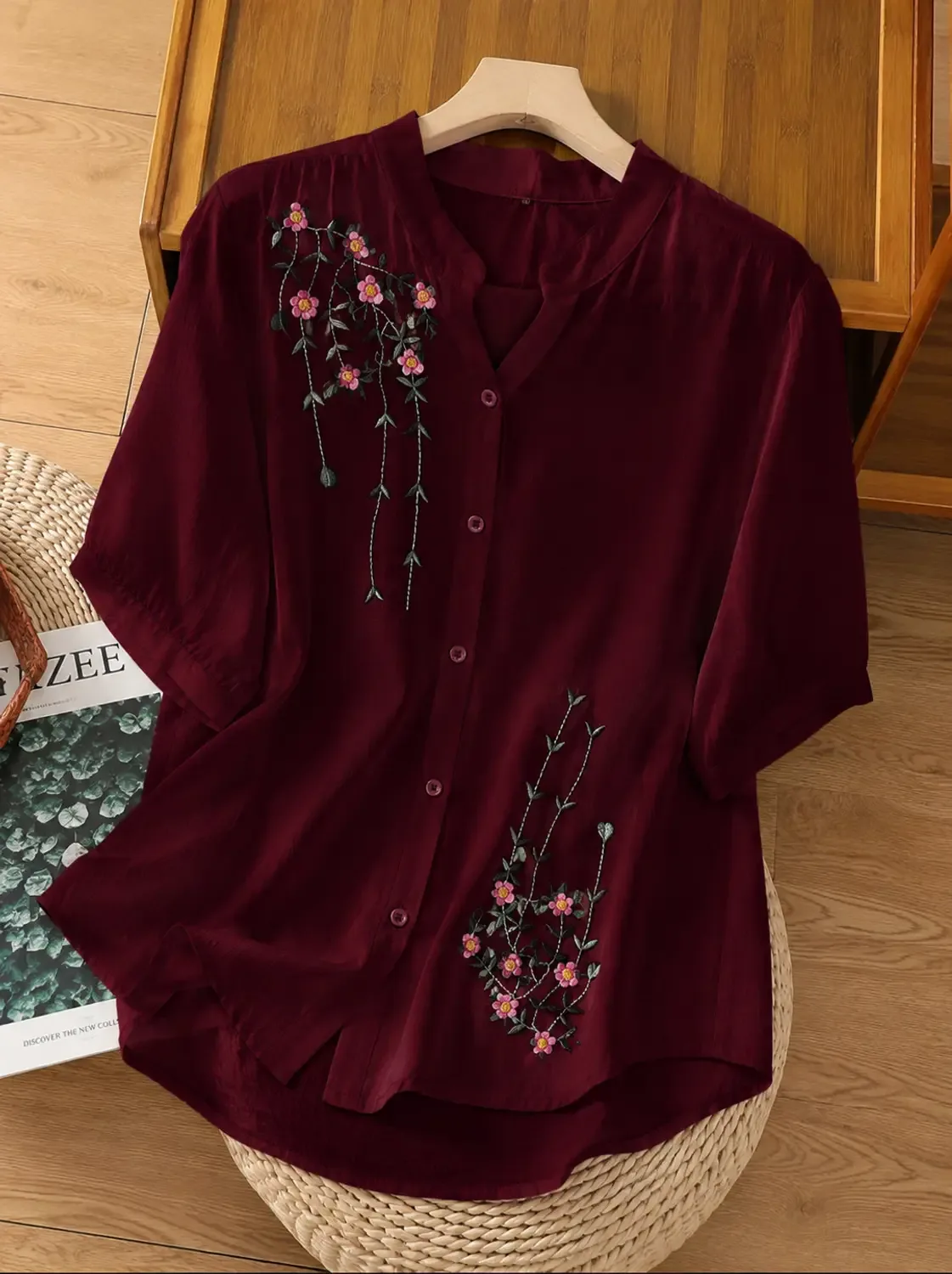
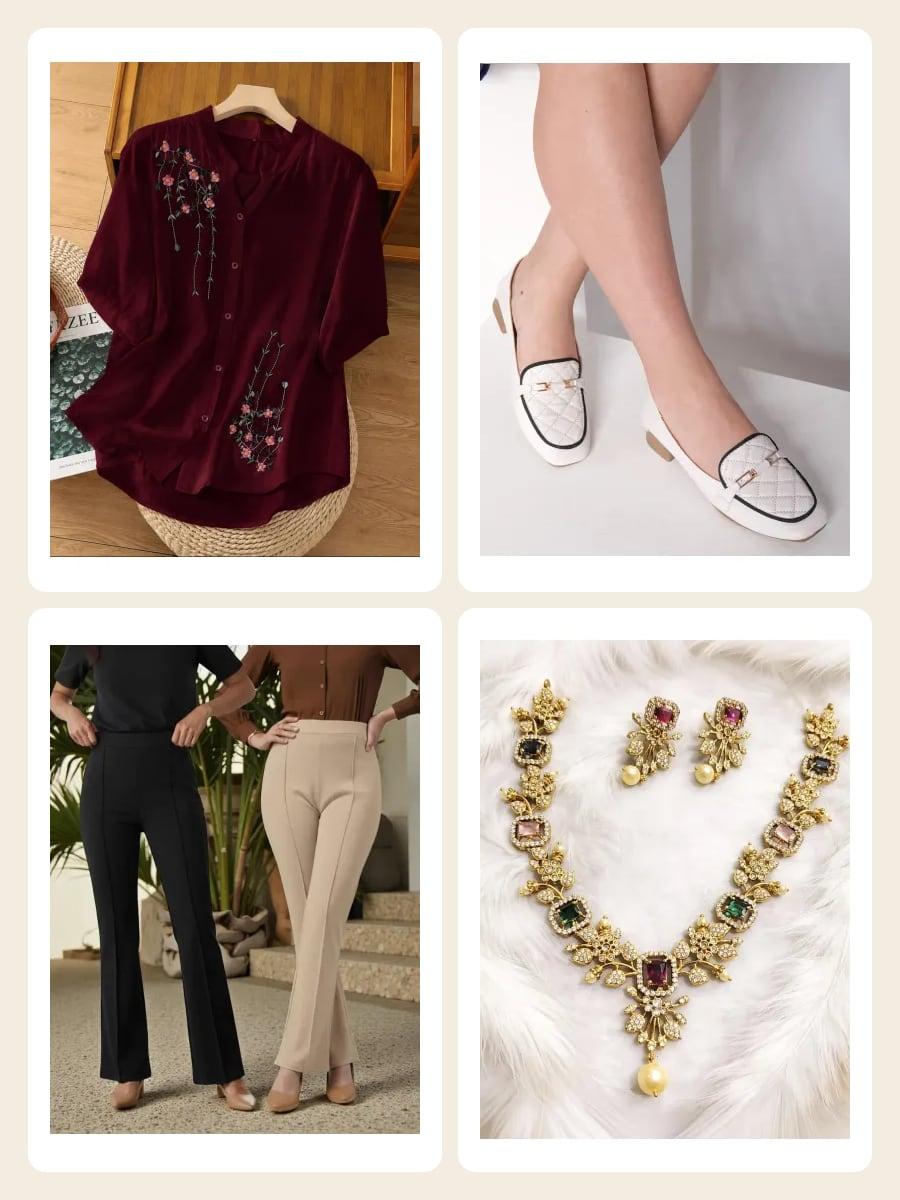
A maroon embroidered shirt suits a mehendi because it is practical and still festive. Half sleeves keep fresh henna clear, buttons do up without wet hands, and pink flowers embroidered on wine-coloured fabric look ready for photos. Beige flared trousers are easy on the floor. The gold necklace set adds the wedding signal. What to keep in mind: The shirt asks for a dry clean on the first wash. Keep the white loafers away from wet henna.
Shirts
Yanvi
Maroon viscose rayon with pink floral embroidery and half sleeves: festive and henna-friendly.
Starting price
₹330
on Flipkart
Trousers
Fuback
A pack of two flared trousers; the beige pair lightens the maroon for the mehendi.
Starting price
₹448
on Flipkart
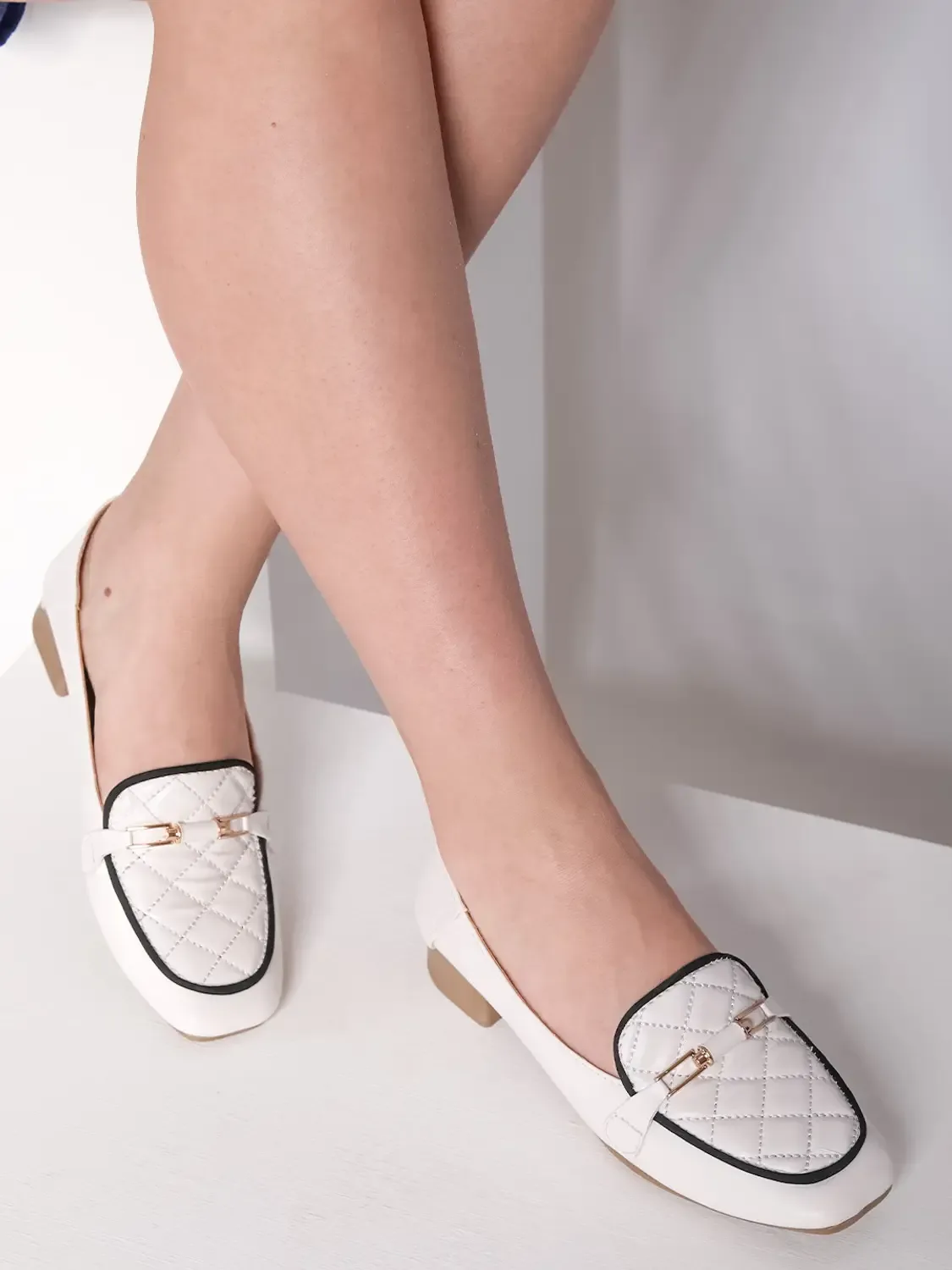
Loafers & Moccasins
Shezone
White quilted loafers with black piping and a gold buckle: neat, and they slip off.
Starting price
₹642
on Flipkart
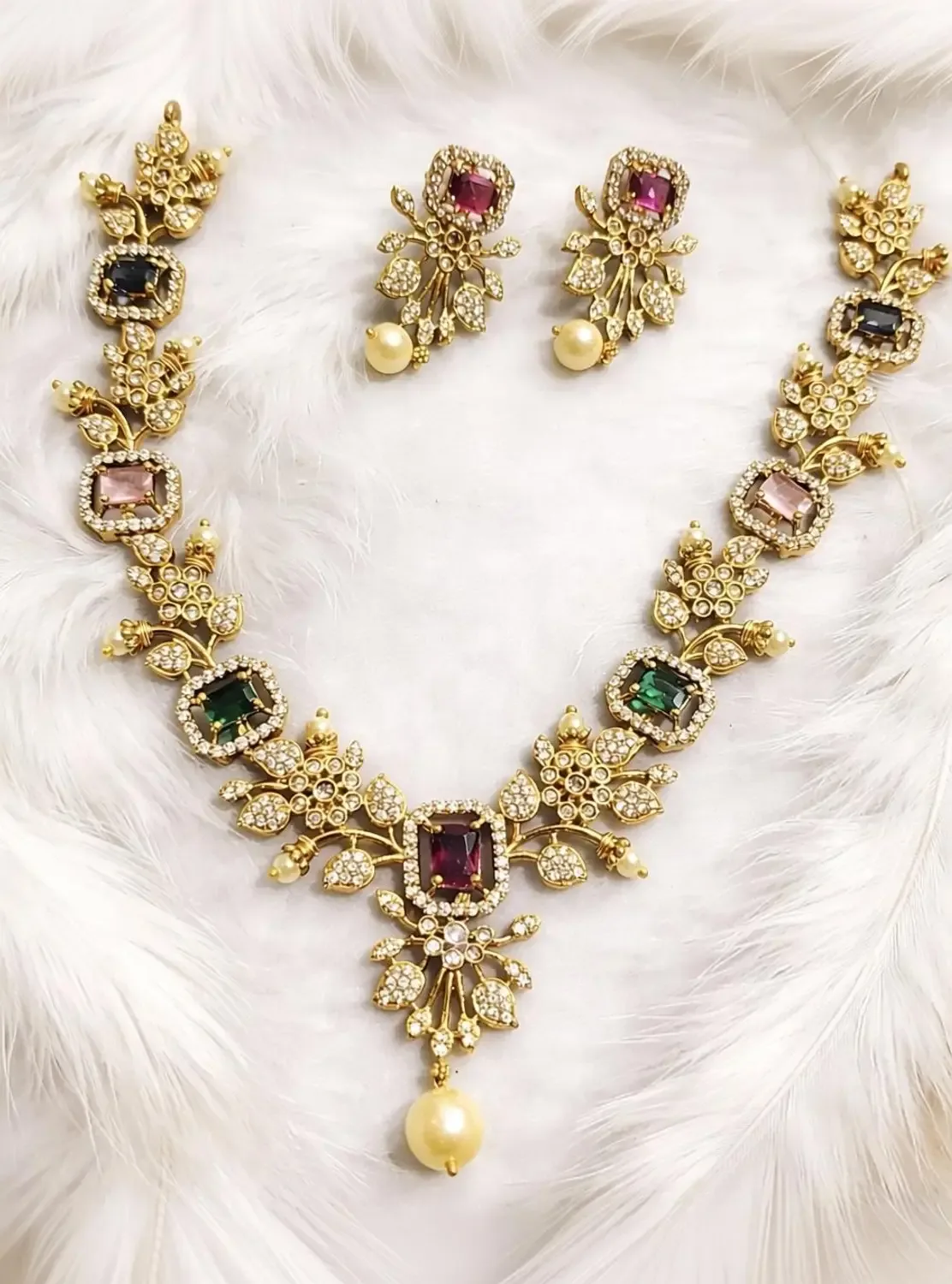
Fashion Jewellery
Revshine
A gold-plated necklace set with multicolour stones and pearl drops, earrings included.
Starting price
₹522
on Flipkart
Mules & Clogs
Nidima
Sage green woven mules; easier to slip off at the floor seating, and green echoes the henna leaves.
Starting price
₹310
on Flipkart
Complete look = the 4 pieces' current prices added up, without the swaps. Each piece is sold separately by its own store, and prices can change.
Look 3 of 7
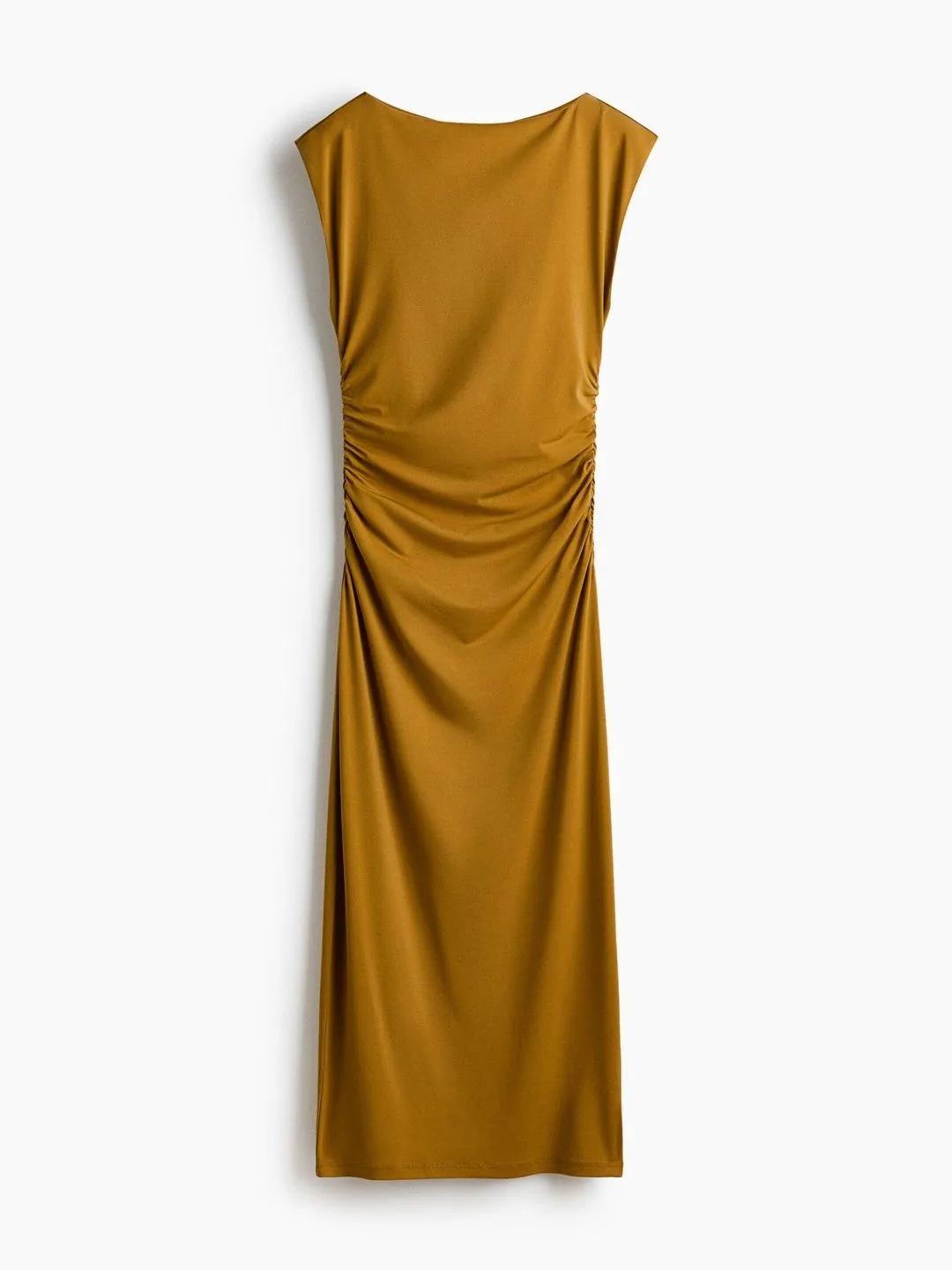
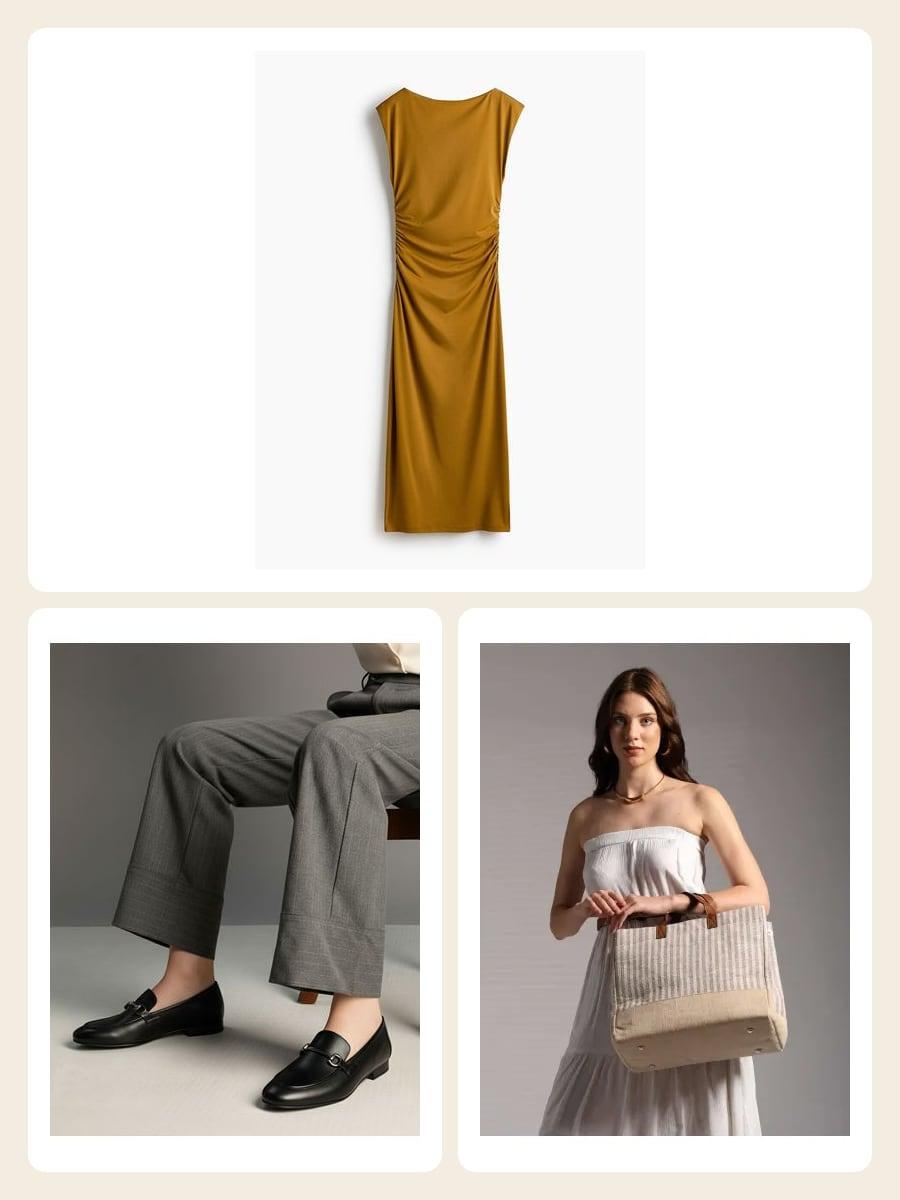
A mustard ruched midi dress gives a sangeet the warm gold of marigolds without any embellishment. The H&M dress is sleeveless with a boat neck and soft ruching down the side, in a stretch jersey you can dance in. Black leather loafers stay on all night. The jute tote adds an earthy texture beside the smooth fabric. What to keep in mind: Listed as yellow, the dress photographs mustard ochre. It is fitted and sleeveless, so it suits a sangeet, not a ceremony.
Dresses
H&M
Mustard stretch jersey with side ruching and a boat neck: it moves with you on the dance floor.
Starting price
₹1,499
on Myntra
Loafers & Moccasins
Kenneth Cole
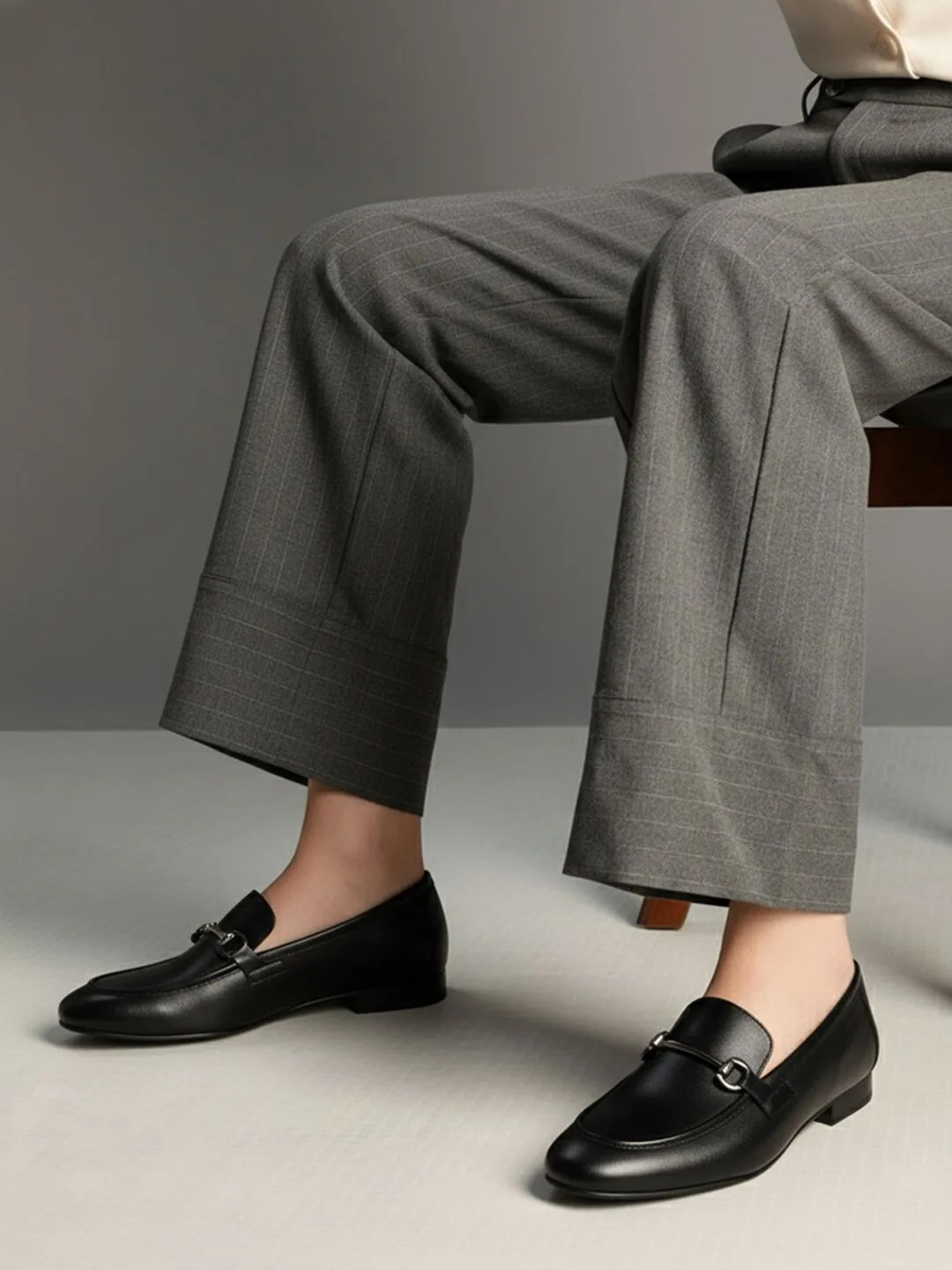
Black leather loafers with a metal bit: flat, secure and still smart at night.
Starting price
₹2,066
on Myntra
Bags & Backpacks
Ensac
A beige jute tote with a striped top and tan handles: texture beside smooth jersey.
Starting price
₹565
on Flipkart
Dresses
Janasya
A marigold floral georgette midi with sleeves and a flared skirt; looser, cooler and more traditional.
Starting price
₹1,180
on Flipkart
Complete look = the 3 pieces' current prices added up, without the swaps. Each piece is sold separately by its own store, and prices can change.
Look 4 of 7
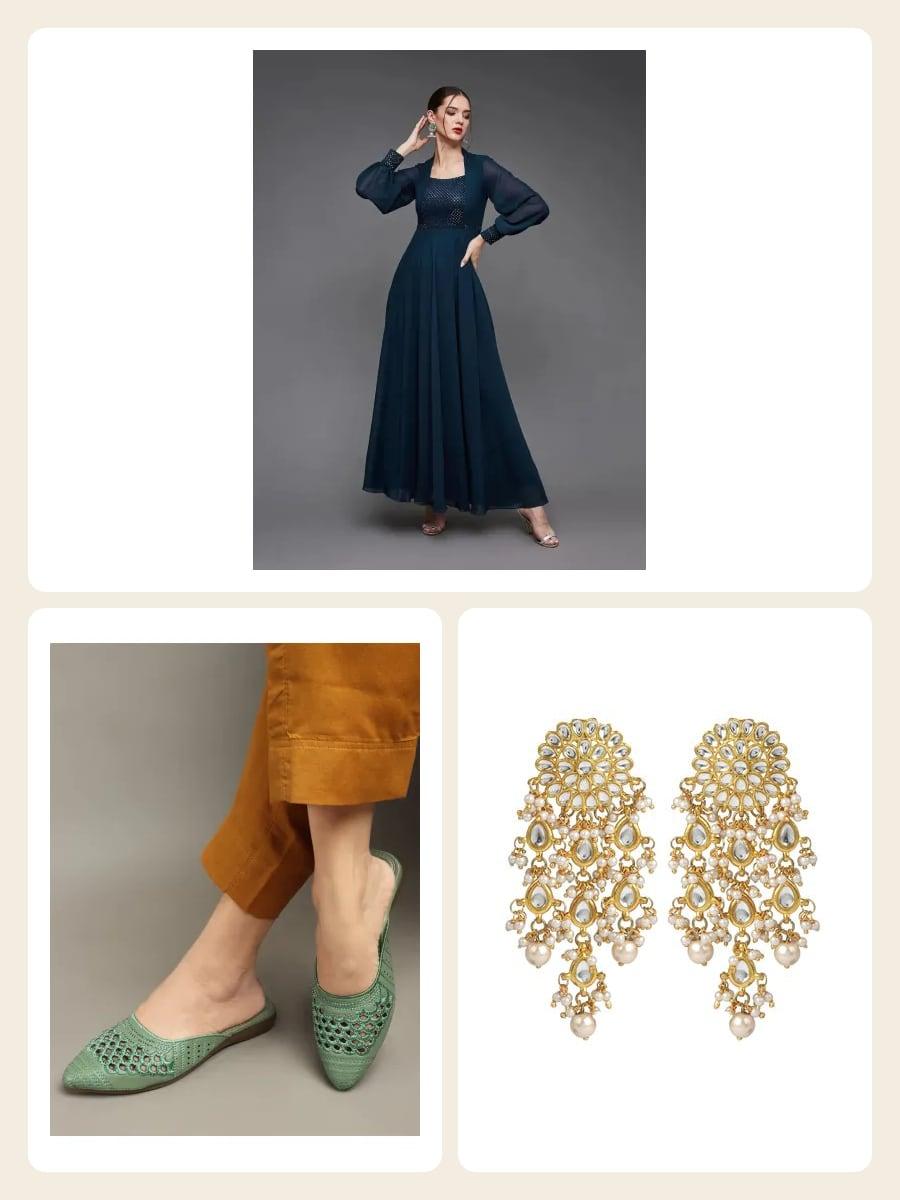
A teal georgette maxi dress is the most ceremony-ready dress in this edit: full sheer bishop sleeves, a square neck, a sparkling bodice and a long, full skirt. Sage green mules sit close to the teal and slip off at the mandap. Gold kundan earrings with pearl drops give it the Indian wedding finish beside lehengas. What to keep in mind: Buy by the photo: the listing says pink, the photos show teal. Georgette is sheer at the sleeves; hand wash and warm iron.
Dresses
Miss Chase
Listed as pink, teal in the photos: georgette with sheer sleeves and a full skirt.
Starting price
₹1,399
on Flipkart
Mules & Clogs
Nidima
Sage green woven mules that echo the teal and come off quickly at the ceremony.
Starting price
₹310
on Flipkart
Fashion Jewellery
Karatcart
Gold kundan chandelier earrings with pearl drops: the festive signal.
Starting price
₹360
on Amazon
Dresses
Berrylush
A red floral wrap midi with flutter sleeves; check first, as red is the bride's colour in many families.
Starting price
₹1,455
on Myntra
Complete look = the 3 pieces' current prices added up, without the swaps. Each piece is sold separately by its own store, and prices can change.
Look 5 of 7
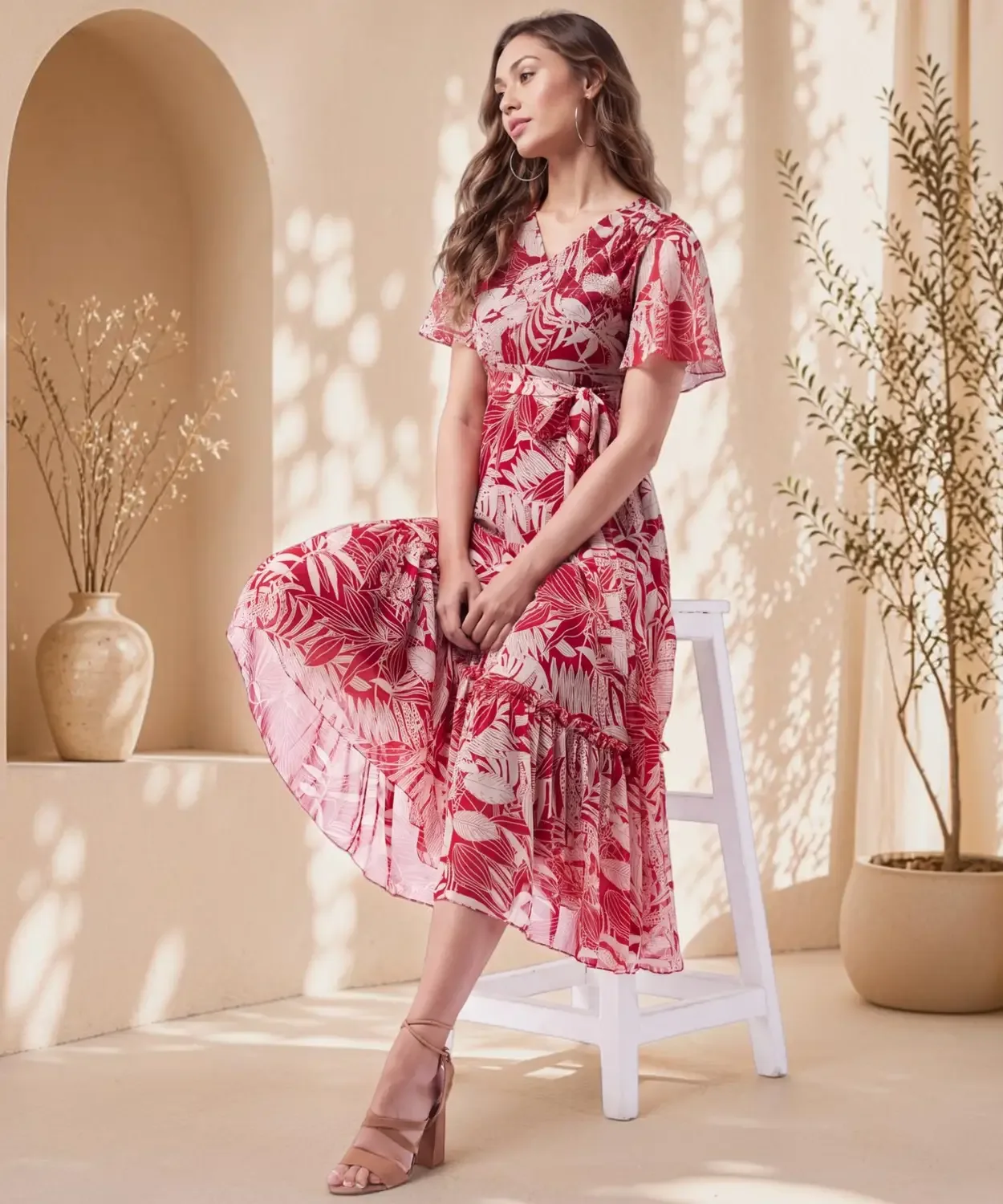
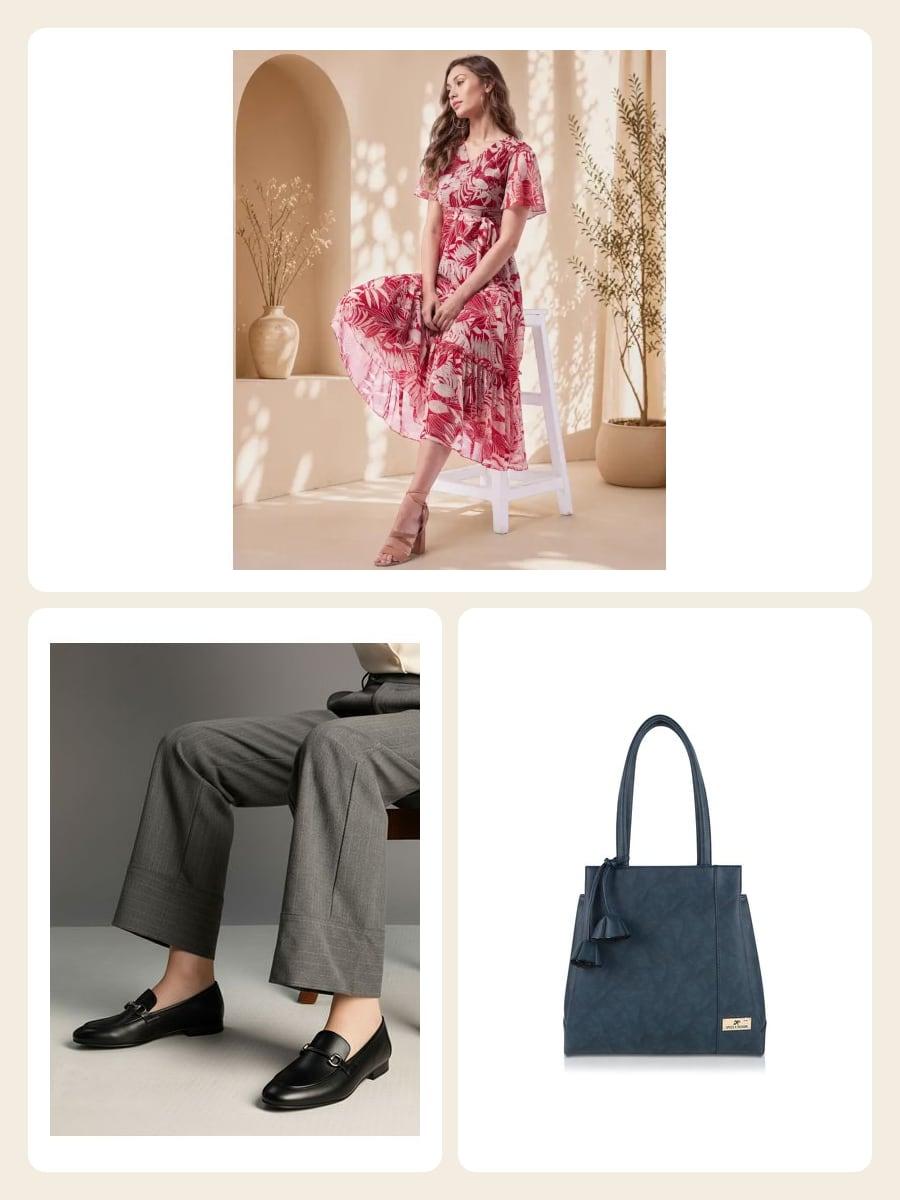
A red print wrap midi dress suits a puja at home because it is festive in colour and easy to sit in. This Miss Chase chiffon dress has a red and blush leaf print, flutter sleeves, a tie waist and a tiered hem with no slit. Loafers come off at the puja room door. The slate-blue tote carries the prasad box home. What to keep in mind: Chiffon is sheer by nature and the listing does not mention a lining. Hand wash in warm water and warm iron only.
Dresses
Miss Chase
Red and blush leaf print chiffon with a wrap front and flutter sleeves: festive and easy to sit in.
Starting price
₹1,080
on Flipkart
Loafers & Moccasins
Kenneth Cole
Black leather loafers that slip off at the door and look neat in the hall.
Starting price
₹2,066
on Myntra
Bags & Backpacks
Sxf Speed X Fashion
Listed as a clutch; the photos show a slate-blue tote with room for a prasad box.
Starting price
₹608
on Amazon
Dresses
MAX
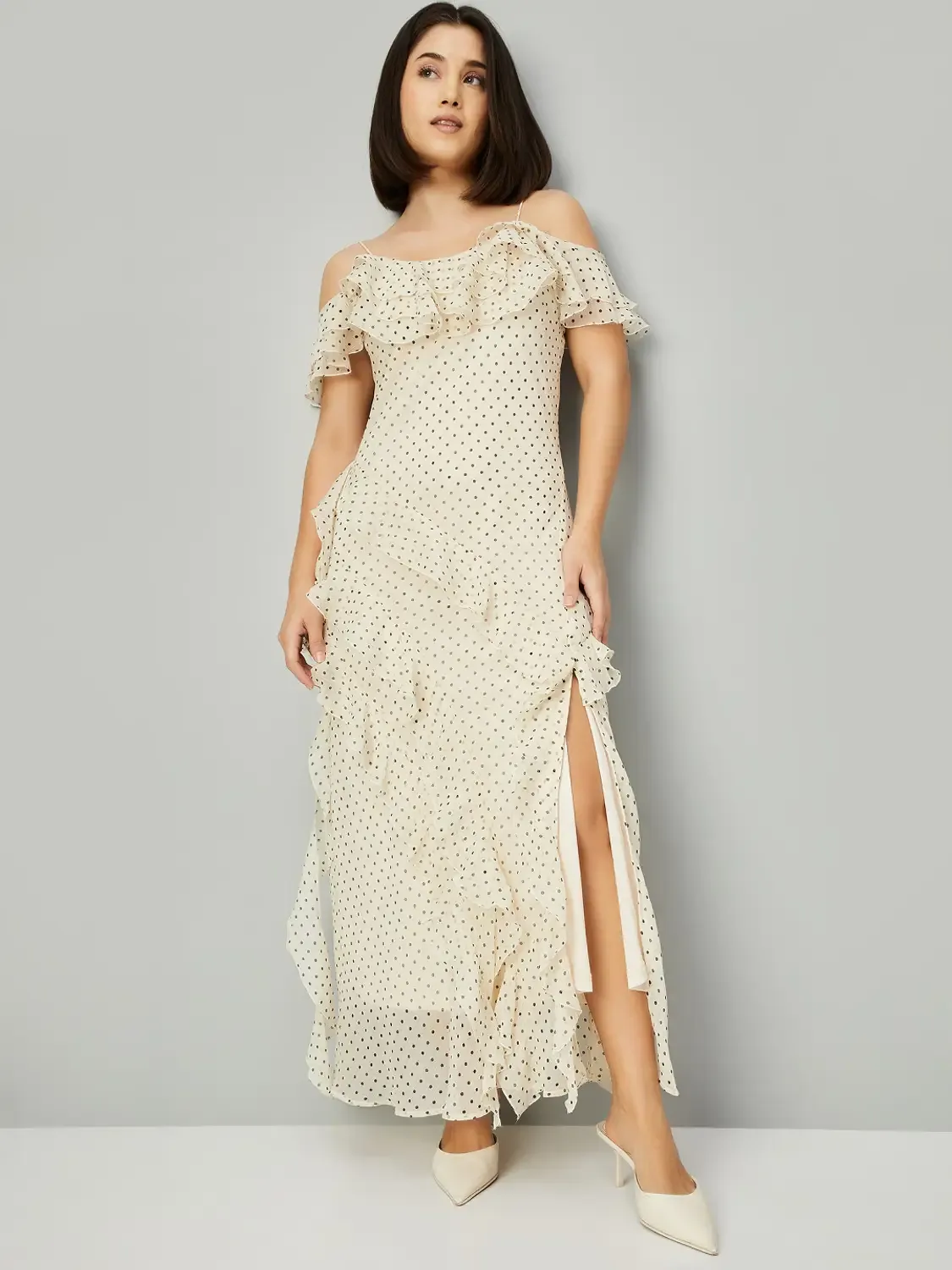
Ivory with black polka dots, a ruffled cold shoulder and a high slit; for the dinner after, not the floor.
Starting price
₹1,069
on Flipkart
Complete look = the 3 pieces' current prices added up, without the swaps. Each piece is sold separately by its own store, and prices can change.
Look 6 of 7
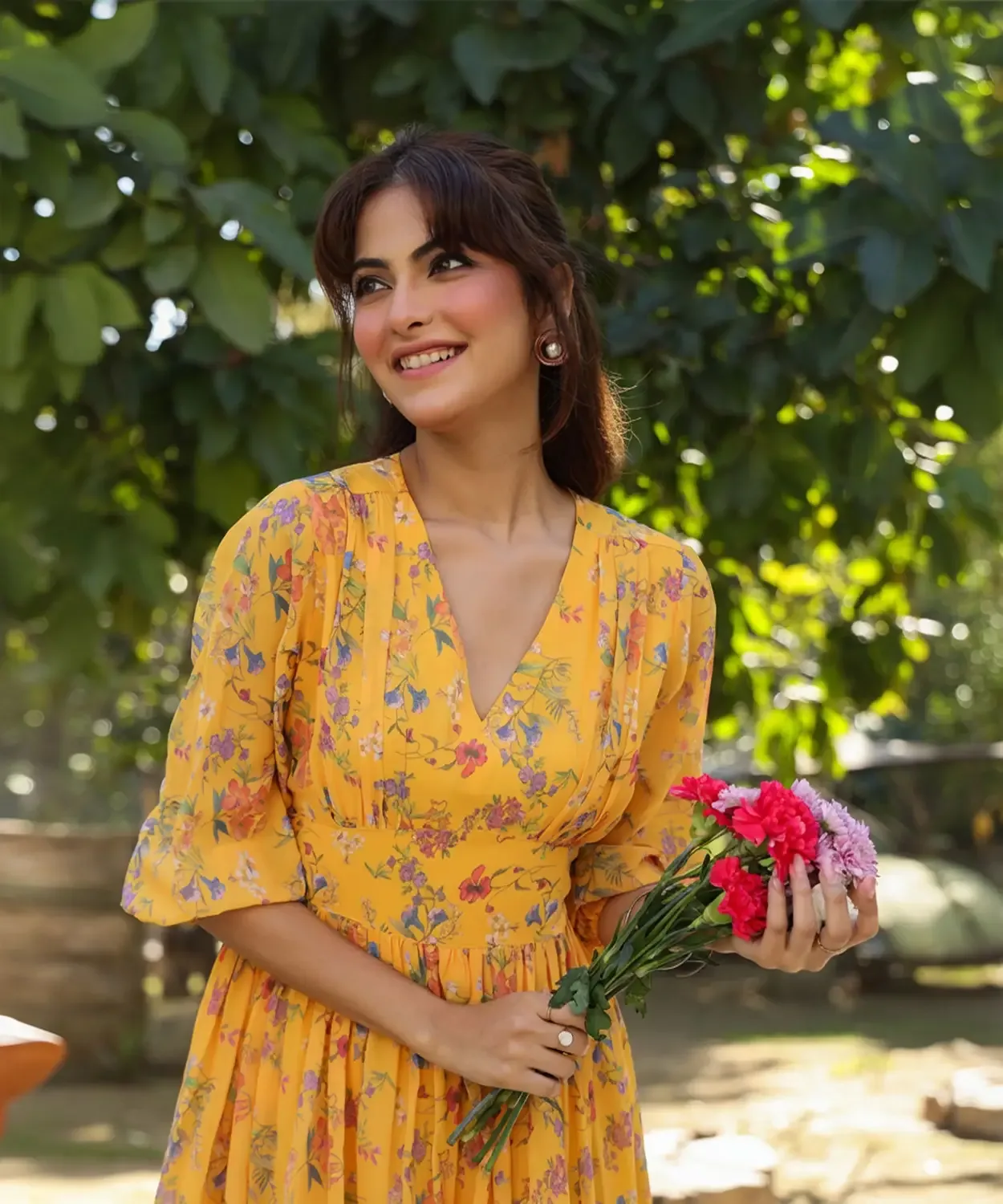
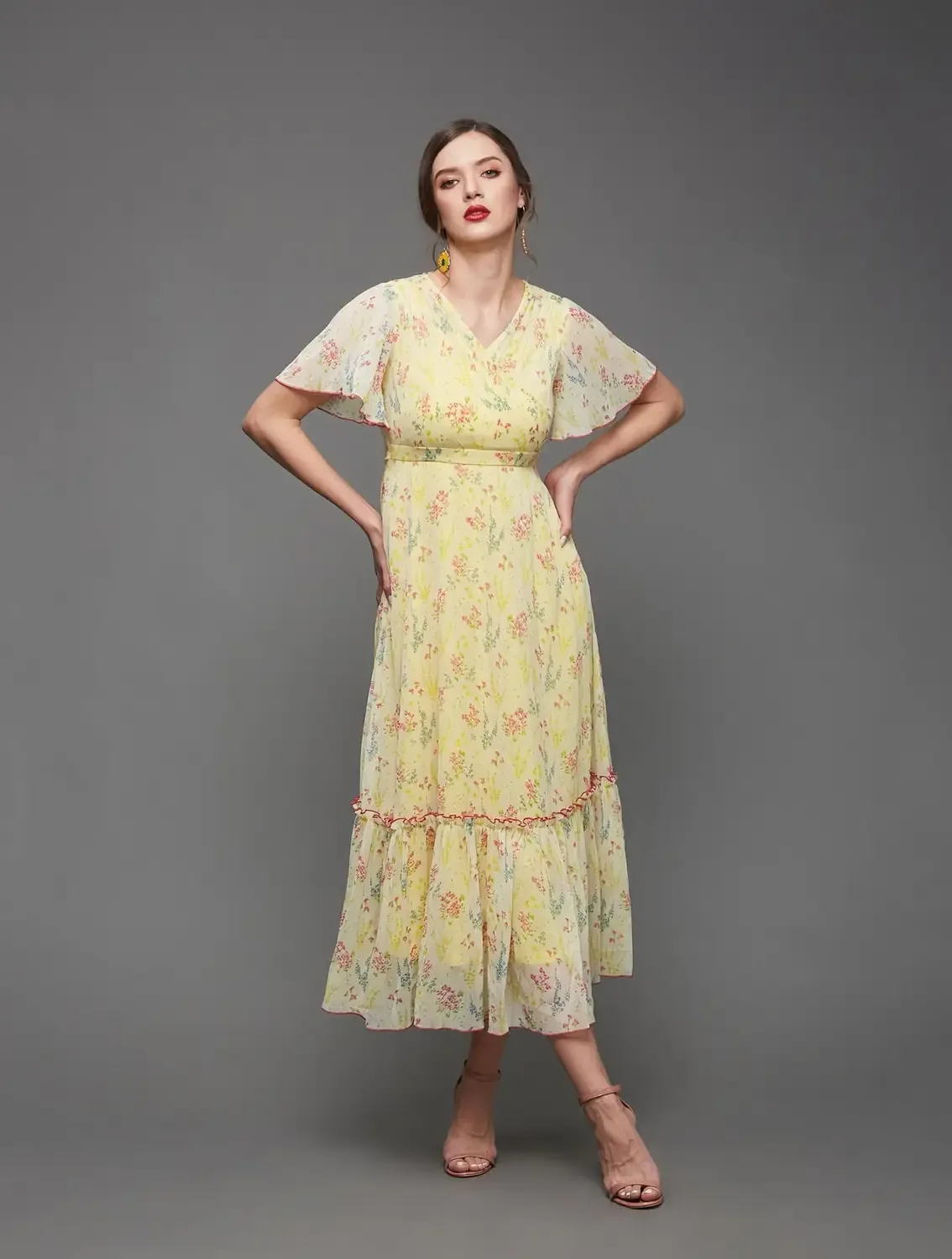
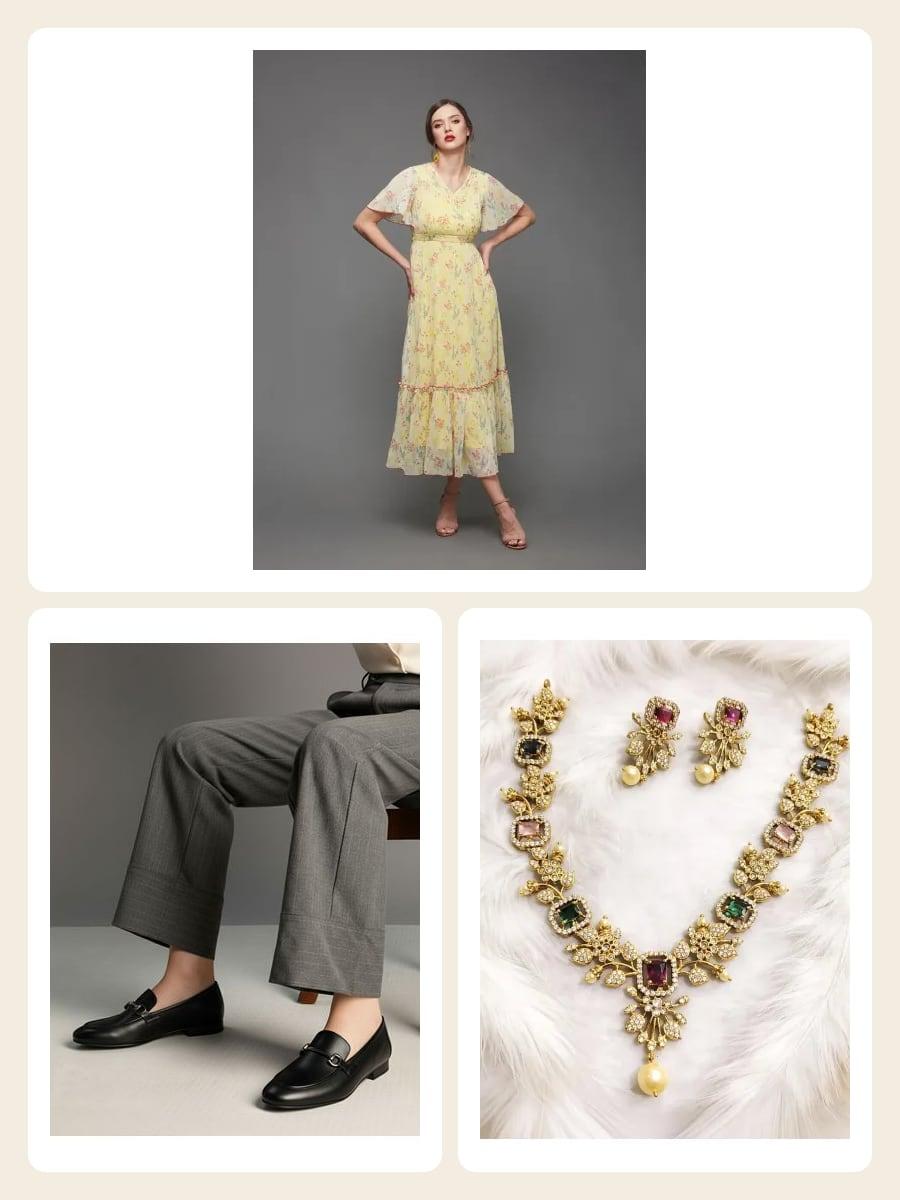
A yellow floral chiffon midi is the most Korean dress in this edit: pale butter yellow, small pastel flowers, flutter sleeves, a wrap neckline and a ruffled hem. On its own it is a garden dress. The gold necklace set turns it into a reception look, and the black leather loafers anchor the pastel. What to keep in mind: Listed as multicolour, the dress is pale yellow with small pastel flowers. Chiffon is sheer, so check the lining.
Dresses
Miss Chase
Pale yellow chiffon with small pastel flowers and flutter sleeves: soft, light and covered.
Starting price
₹999
on Flipkart
Loafers & Moccasins
Kenneth Cole
Black leather loafers: a dark anchor under a pale dress, and comfortable all night.
Starting price
₹2,066
on Myntra
Fashion Jewellery
Revshine
A gold-plated necklace and earring set with coloured stones and pearl drops.
Starting price
₹522
on Flipkart
Dresses
Fable Street
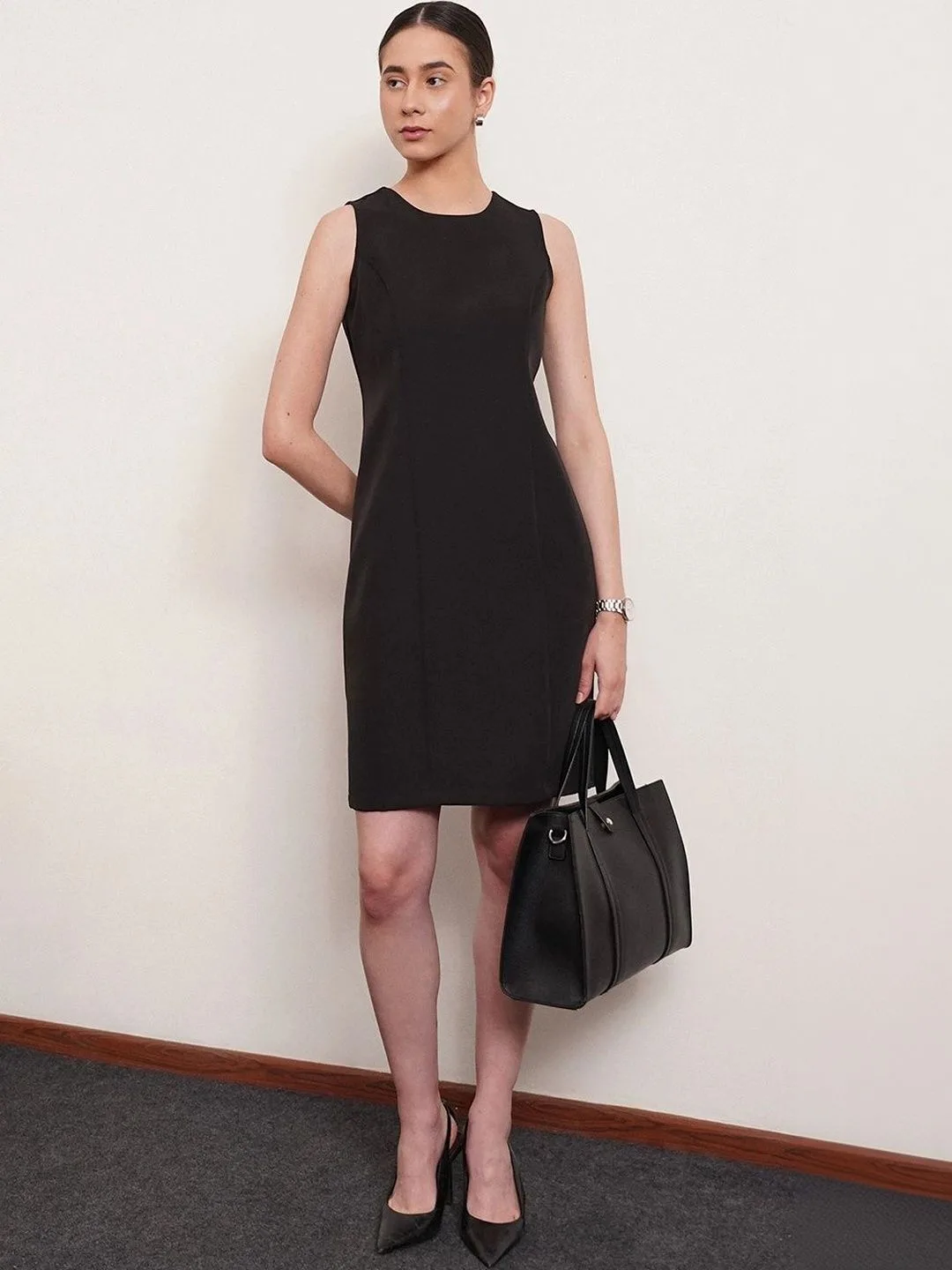
A black sleeveless sheath above the knee; only for a city cocktail reception where the hosts welcome black.
Starting price
₹2,438
on Myntra
Complete look = the 3 pieces' current prices added up, without the swaps. Each piece is sold separately by its own store, and prices can change.
Look 7 of 7
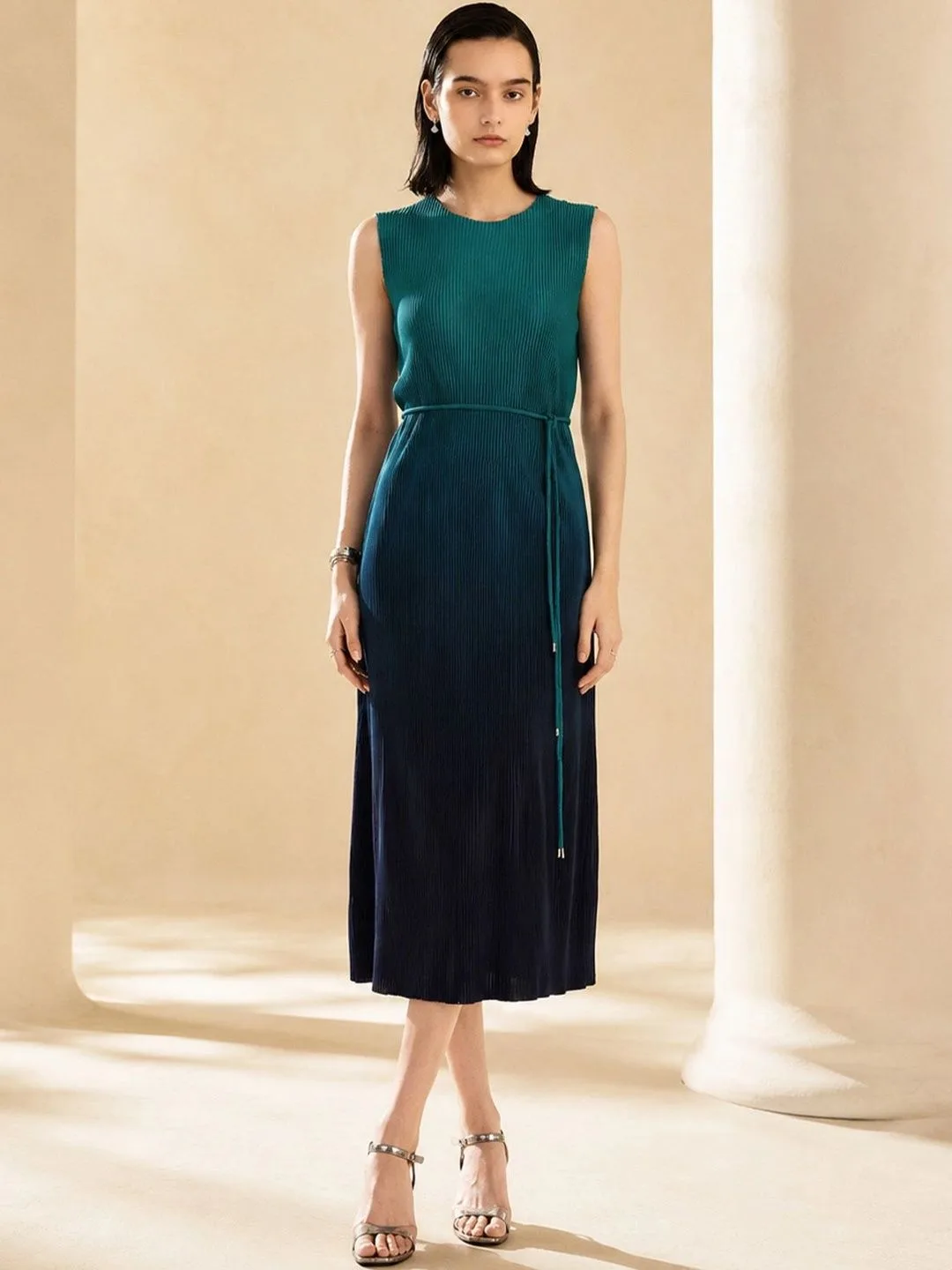
A teal ombre pleated midi has the clean, column shape Korean dressing loves: fine pleats, a round neck, a tie belt and colour that deepens from teal at the shoulder to navy at the hem. For a close family wedding, two Indian accents bring it into the family: floral embroidered mules and a gold necklace set. What to keep in mind: The dress is sleeveless, so wear it to the cocktail or day function, or ask the family before the ceremony.
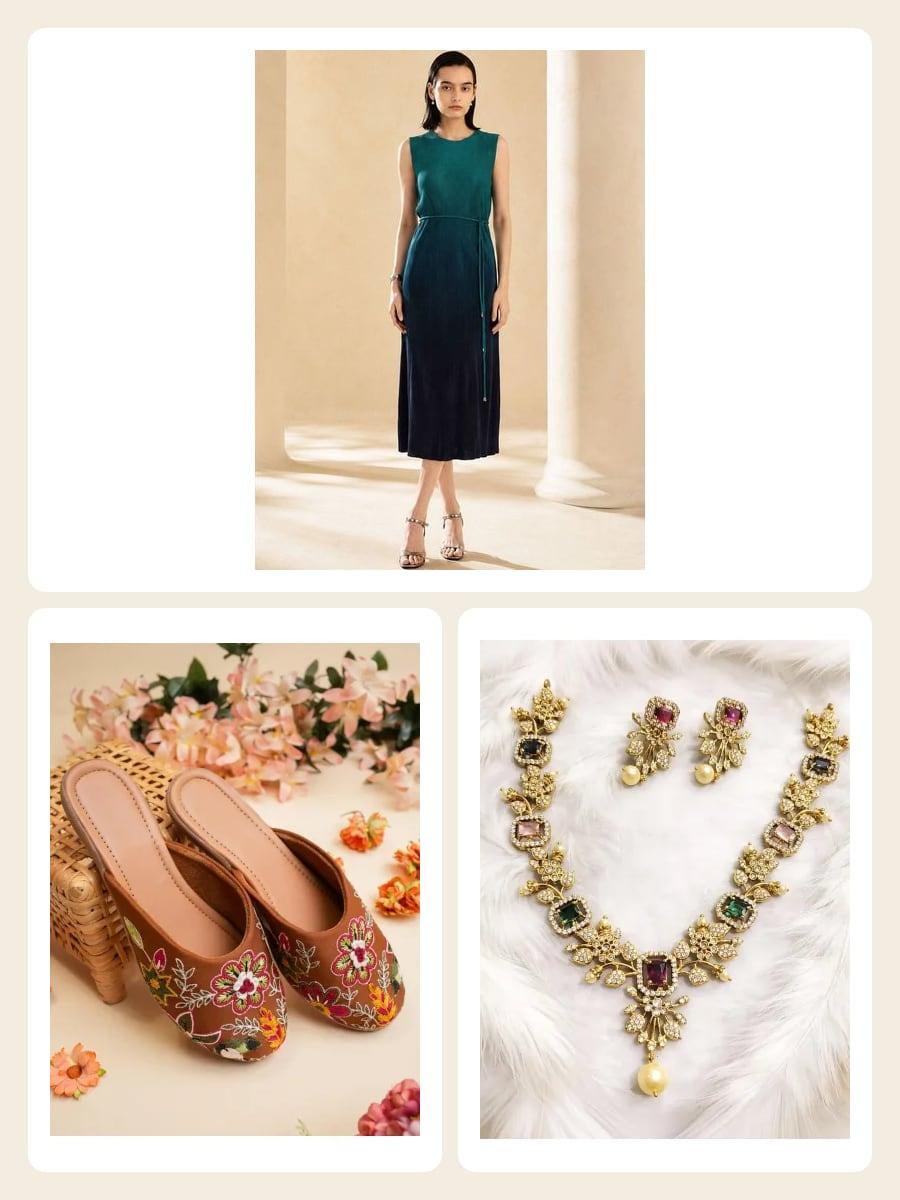
Dresses
Fable Street
Teal-to-navy pleated midi with a tie belt: a clean column with depth of colour.
Starting price
₹2,306
on Myntra
Mules & Clogs
Nyty20
Brown canvas embroidered with pink, yellow and green flowers: an Indian accent at the floor.
Starting price
₹408
on Flipkart
Fashion Jewellery
Revshine
A gold-plated necklace set with coloured stones and pearls, earrings included.
Starting price
₹522
on Flipkart
Dresses
Athena
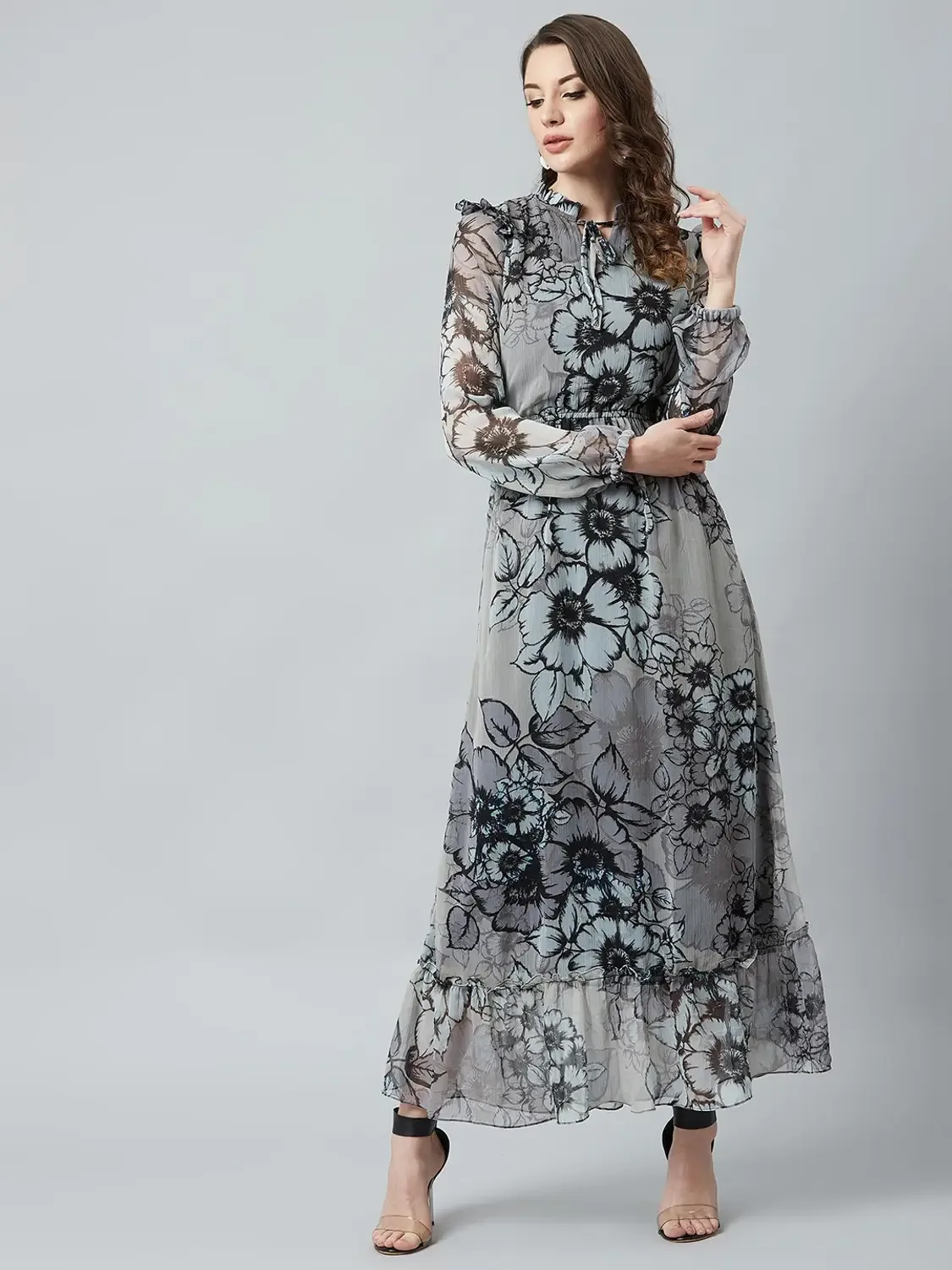
A grey floral chiffon maxi with full sleeves and a ruffled high neck; more coverage for elders.
Starting price
₹1,324
on Flipkart
Complete look = the 3 pieces' current prices added up, without the swaps. Each piece is sold separately by its own store, and prices can change.
A wedding weekend is where repeat pieces save the most money, because the functions sit days apart and the photos rarely sit side by side.
Indian guests attend several functions in one weekend, and one dress can cover two of them if the accessories change. Take the Miss Chase pale yellow floral chiffon midi. With the gold necklace set and black leather loafers, it is the reception look below: metal near the face and a dark shoe make it evening. With the Nyty20 floral embroidered mules and the Ensac jute tote instead, the same dress becomes a mehendi outfit: embroidery at the floor and a natural texture at the hip read daytime and garden.
The same logic works for the teal Miss Chase maxi. With kundan earrings and sage green mules, it suits the ceremony. With the black loafers and the slate-blue tote, it moves to a cocktail evening. The dress stays; its neighbours change, and so does the function it belongs to. Before buying a new dress for each function, check which of your pieces can do this.
The quickest way to make a Korean-style piece feel at home in a wedding crowd is to add one Indian element and keep the rest soft. In this edit, three pieces do that job. Kundan or stone jewellery adds gold near the face. Embroidered mules in jutti colours add festivity at the floor. And festive colour itself, such as teal, mustard, maroon or red, signals celebration even in a plain cut. One of the three is enough; two make the look clearly festive; three can start to compete with the soft Korean shape.
Most of the top Korean outfit guides ignore temperature. Indian wedding days do not.
Shoes at an Indian wedding come off more often than anywhere else: at the mandap, the puja room, the mehendi floor, a relative's home. That changes the choice. Slip-on shoes win, which is why every pair in this edit is a mule or a loafer. Mules come off fastest and suit day functions. Loafers stay on through dancing and suit evenings. Heels appear nowhere, on purpose: a long night of standing, dancing and sitting cross-legged is easier flat.
We read the pages that rank on Google India for "korean outfits for women" and "korean wedding guest outfit" before writing this guide. Most share four blind spots.
Korean outfits for women suit Indian weddings when you keep the Korean shape and follow the Indian code: soft tailoring, sleeves instead of layers, calm colour with one festive accent, and shoes that slip off. Plan one look per function, then repeat the shoes and jewellery across them. The rule to reuse: let the function decide the coverage, and let the jewellery decide the occasion. For evening parties, see korean party dress looks; for everyday dresses on a smaller budget, see western dress for women under 500; for more options, see dresses for women for wedding.
FundaTrendKa styles and links to clothing, footwear and accessories sold by other retailers; we don't sell, stock or ship them. Each product is bought on its own from its store, and prices are the retailer's reference prices, which may change. We may earn a commission when you buy through these links, at no extra cost to you.